
Oregon · Washington · Idaho
When to plant artichokes
Plant in the garden: Portland and Seattle Mar 15 – Apr 26; Spokane Apr 15 – May 27; Boise Apr 1 – May 13; Bend May 12 – Jun 23.
Your dates in
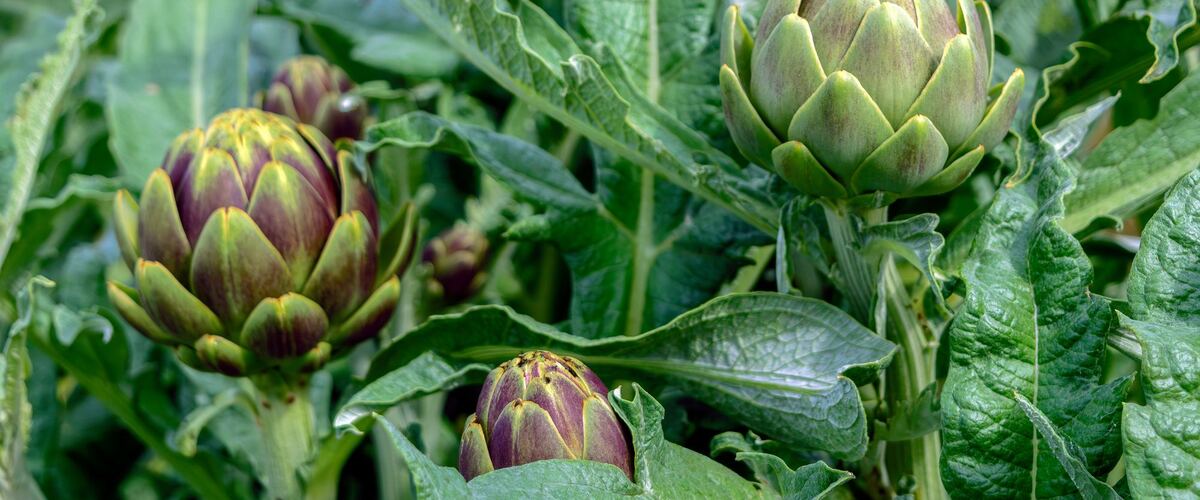
Artichokes are a large thistle grown for the flower bud, which is cut while still tight and steamed or grilled; you eat the fleshy base of each scale and the tender heart. Buds left on the plant open into big purple thistle flowers that bees love. Plants grow 3 to 4 feet across, so give them room.
Puts artichokes on your free plan, with dates for your town and a spot in your beds.
- Difficulty
- Moderate
- Sun
- Full sun
- Spacing
- 3 to 4 feet apart
- Planting depth
- Plant starts at the depth they grew in the pot
- Frost
- Crowns survive about 15°F under thick mulch
- First harvest
- Buds in late summer the first year from Imperial Star; otherwise from early summer of year two
A perennial in mild west-side gardens if you mulch the crowns for winter. In colder areas, grow Imperial Star as an annual: it buds the first summer after a few weeks of cool spring weather.
Artichoke planting dates
| Towns | Plant in the garden |
|---|---|
| Portland, OR, Seattle and Tacoma, WA | Mar 15 – Apr 26 |
| Spokane, WA | Apr 15 – May 27 |
| Boise and Meridian, ID, Astoria, OR | Apr 1 – May 13 |
| Bend and Redmond, OR | May 12 – Jun 23 |
Dates for six main cities. For any of the other 80 towns, type it in the box at the top of the page or browse all towns.
| Gresham, OR, Oregon City and West Linn, OR, Portland, OR, St. Helens and Scappoose, OR, Wilsonville and Canby, OR | Mar 15 – Apr 26 |
|---|---|
| Hillsboro and Beaverton, OR | Mar 19 – Apr 30 |
| Corvallis and Albany, OR, Eugene, OR, Salem, OR | Mar 15 – Apr 26 |
|---|---|
| Cottage Grove, OR | Mar 27 – May 8 |
| McMinnville and Newberg, OR | Mar 18 – Apr 29 |
| Ashland and Talent, OR | Apr 8 – May 20 |
|---|---|
| Grants Pass, OR, Medford, OR, Roseburg, OR | Mar 15 – Apr 26 |
| Astoria, OR, Brookings and Gold Beach, OR, Coos Bay and North Bend, OR, Newport and Lincoln City, OR, Tillamook, OR | Apr 1 – May 13 |
|---|
| Bend and Redmond, OR, Klamath Falls, OR | May 12 – Jun 23 |
|---|---|
| Burns, OR | May 14 – Jun 25 |
| Lakeview, OR | May 7 – Jun 18 |
| Madras, OR | Apr 21 – Jun 2 |
| Prineville, OR | May 4 – Jun 15 |
| Baker City, OR | Apr 27 – Jun 8 |
|---|---|
| Enterprise and Joseph, OR | Apr 26 – Jun 7 |
| Hermiston, OR, Hood River, OR, Ontario, OR, Pendleton, OR, The Dalles, OR | Apr 1 – May 13 |
| John Day, OR | Apr 30 – Jun 11 |
| La Grande, OR | Apr 15 – May 27 |
| Bremerton and Port Orchard, WA, Everett, WA, Kent, Renton and Auburn, WA, Seattle and Tacoma, WA | Mar 15 – Apr 26 |
|---|---|
| Olympia, WA | Apr 1 – May 13 |
| Shelton, WA | Mar 30 – May 11 |
| Anacortes, WA, Bellingham, WA, Friday Harbor and the San Juans, WA, Mount Vernon and Burlington, WA, Oak Harbor and Whidbey Island, WA | Mar 15 – Apr 26 |
|---|
| Aberdeen and Hoquiam, WA, Forks, WA, Long Beach and Ilwaco, WA | Apr 1 – May 13 |
|---|---|
| Port Angeles, WA, Port Townsend, WA | Mar 15 – Apr 26 |
| Sequim, WA | Mar 24 – May 5 |
| Centralia and Chehalis, WA | Mar 25 – May 6 |
|---|---|
| Longview and Kelso, WA, Vancouver, WA | Mar 15 – Apr 26 |
| Chelan, WA, Wenatchee, WA | Apr 1 – May 13 |
|---|---|
| Leavenworth, WA, Omak and Okanogan, WA | Apr 15 – May 27 |
| Winthrop and Twisp, WA | Apr 17 – May 29 |
| Ellensburg, WA | Apr 15 – May 27 |
|---|---|
| Ephrata and Quincy, WA, Moses Lake, WA, Tri-Cities (Pasco, Kennewick, Richland), WA, Walla Walla, WA | Apr 1 – May 13 |
| Goldendale, WA | Apr 21 – Jun 2 |
| Sunnyside, Grandview and Prosser, WA | Apr 3 – May 15 |
| Yakima, WA | Apr 10 – May 22 |
| Colville, WA, Pullman, WA, Spokane, WA | Apr 15 – May 27 |
|---|
| Bonners Ferry, ID, Coeur d'Alene and Post Falls, ID, Sandpoint, ID | Apr 15 – May 27 |
|---|
| Lewiston, ID | Apr 1 – May 13 |
|---|---|
| Moscow, ID | Apr 15 – May 27 |
| Boise and Meridian, ID, Nampa and Caldwell, ID | Apr 1 – May 13 |
|---|---|
| Emmett, ID | Apr 2 – May 14 |
| McCall, ID | May 25 – Jul 6 |
| Burley and Rupert, ID, Idaho Falls, ID, Pocatello, ID, Rexburg, ID, Twin Falls, ID | Apr 15 – May 27 |
|---|---|
| Salmon, ID | Apr 19 – May 31 |
Artichoke year at a glance
| Task | J | F | M | A | M | J | J | A | S | O | N | D |
|---|---|---|---|---|---|---|---|---|---|---|---|---|
| Plant | Mar | Apr | ||||||||||
| Harvest | May | Jun | Jul | Sep | Oct |
Around Portland. Colder towns, especially east of the Cascades, run a few weeks later; the table above has your town's planting dates. Harvest months are for an established plant.
How to grow artichokes
- Pick a sunny spot with soil that drains well, and mix in an inch or two of compost.
- Plant artichoke plants on your city's dates, 3 to 4 feet apart. Plant starts at the depth they grew in the pot.
- Water deeply and feed with compost; artichokes are big, hungry plants. Mulch to keep roots cool in summer and the crowns dry in winter.
- Harvest: Cut buds with an inch or two of stem while the scales are still tight. Smaller side buds follow the big central one.
Growing artichokes in your part of the Northwest
The same plant behaves differently on the wet west side, the foggy coast and the dry, colder east side.
West-side valleys
Willamette Valley, Puget Sound, southern Oregon
Artichokes often survive Willamette and Puget Sound winters with mulch. A hard freeze can kill them.
Coast
Oregon and Washington coast
Mild winters and cool summers suit artichokes.
East of the Cascades
Columbia Basin, Yakima, Boise, Spokane, north Idaho
Winters usually kill artichokes; grow them as annuals with varieties like Imperial Star.
More artichoke varieties
More widely sold picks that do well somewhere in the Northwest. The tag says which part of the Northwest suits each one best.
Imperial Star
Bred to produce buds the first year from seed, so it works even where crowns may not survive winter. Plump, tender, nearly spineless green buds.
Both sides
Green Globe
The standard perennial artichoke, with large, round green buds. It does best where winters are mild and crowns can be mulched against cold and wet.
Coast and west side
Violetto
Elongated purple buds with a tender heart and rich flavor. It is a striking ornamental as well as an edible, best grown as a perennial in mild west-side gardens.
Coast and west side
Tavor
An early, productive green artichoke that buds the first year from seed. A good choice for gardeners who want to grow artichokes as an annual.
Both sides
Colorado Star
Purple-tinged buds produced the first year from seed. It adds color to the garden and the kitchen and does not depend on crowns surviving winter.
Both sides
How much to grow
How many to plant
For a family of four, 3 to 6 plants. Each needs about a 4-foot circle.
What to expect
About 5 to 10 buds per mature plant, plus a smaller fall crop on the west side.
Storing the harvest
Keep in a bag in the fridge for about a week.
Key numbers
- About 15°F, mulchedCrown hardiness
- 3–4 feetSpacing
- Year 1 (Imperial Star)First buds
- Crown rot in winterBiggest risk
Top care tip: Cut plants down in fall and cover the crowns with straw or leaves to keep them dry over winter.
Growing notes
What makes the difference in Northwest gardens, in plain language.
Perennial or annual
Artichokes are large perennial thistles from the Mediterranean. In mild gardens west of the Cascades, a well-mulched crown can come back for several years, with the biggest harvests from year two on. In colder areas, where crowns freeze, grow them as annuals.
Imperial Star was bred to bud in its first year. Artichokes need a spell of cool weather, roughly ten days or more below 50°F, to switch from making leaves to making buds. Set young plants out in spring while nights are still cool and they'll bud by late summer. Green Globe and Violetto usually wait until year two.
Getting crowns through a wet winter
Cold alone is rarely what kills artichokes here; cold plus soggy soil is. Water sitting around the crown rots it. Plant in a raised bed or a spot that drains well, and in fall cut the plants down to about a foot and pile a thick layer of straw or leaves over the crowns. Pull the mulch back in early spring as new growth appears.
Every few years, crowns get crowded. Dig and split off rooted side shoots in spring to replant or share.
Feeding, pests and harvest
Artichokes are big, hungry plants. Work plenty of compost into the bed and water deeply, since drought stress makes buds tough. Aphids gather under leaves and in buds; a strong spray of water knocks them off. Slugs and earwigs sometimes hide between the scales.
Cut buds while the scales are tight, with an inch or two of stem. If a bud opens, leave it: the purple thistle flower is beautiful and bees love it.
Good neighbors
Good neighbors
- Low herbs like thyme. Grow around the base without competing.
Pests and problems
What most often goes wrong with artichokes in Northwest gardens, how to spot it and what to do.
Winter rot
Signs: Crowns fail to come back in spring.
What to do: Good drainage, and mulch the crown in fall.
Aphids
Signs: Black or green clusters on the buds.
What to do: Hose them off.
Slugs and earwigs
Signs: Holes in leaves and hidden in the buds.
What to do: Slug bait, and soak buds in salt water before cooking.
Common questions about growing artichokes
When should I plant artichokes in Oregon, Washington and Idaho?
Plant in the garden: Mar 15 – Apr 26 in Portland and Seattle, Apr 15 – May 27 in Spokane, Apr 1 – May 13 in Boise and May 12 – Jun 23 in Bend. Pick your town at the top of the page for your own dates.
Can artichokes grow in the Pacific Northwest?
Yes. West of the Cascades they often survive as perennials if the crowns are mulched and the soil drains well. In colder areas, grow Imperial Star as an annual for a first-year harvest.
When is an artichoke ready to pick?
When the bud is full size but the scales are still tight and closed. Once the scales start to spread, the bud becomes tough, though you can let it bloom for the flower.
How do I overwinter artichokes?
In fall, cut the plants down to about a foot and cover the crowns with a thick layer of straw or leaves. Good drainage matters as much as warmth, since soggy soil rots the crowns.
See what else to plant in March or April.
 Asparagus
 Rhubarb
 Horseradish
 Sorrel