
Oregon · Washington · Idaho
When to plant blackberries
Plant in the garden: Portland and Seattle Mar 1 – Apr 19; Spokane Apr 1 – May 20; Boise Mar 20 – May 8; Bend Apr 28 – Jun 16.
Your dates in
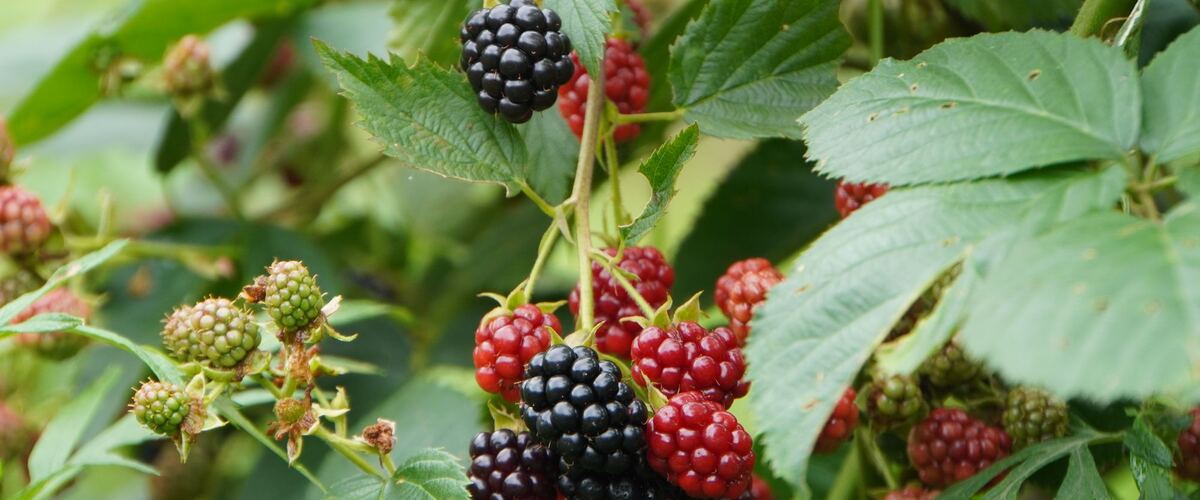
Blackberries are thorny or thornless cane fruits in the rose family, grown for summer berries eaten fresh or baked into pie, jam and cobbler. Unlike raspberries, the soft core stays inside the berry when you pick it. Canes grow one year and fruit the next, so pruning mostly means cutting out the canes that have already fruited.
Puts blackberries on your free plan, with dates for your town and a spot in your beds.
- Difficulty
- Easy
- Sun
- Full sun
- Spacing
- 3 to 5 feet apart for upright types, 5 to 8 feet for trailing
- Planting depth
- Same depth as in the pot, roots covered
- Frost
- Hardy perennial; comes back every year
- First harvest
- A light crop in year two, full crops from year three
Trailing types like Marion are Oregon's famous berry but are less cold-hardy, so colder eastern and high areas do better with upright, thornless types. Never plant Himalayan blackberry, an invasive weed.
Blackberry planting dates
| Towns | Plant in the garden |
|---|---|
| Portland, OR, Seattle and Tacoma, WA | Mar 1 – Apr 19 |
| Spokane, WA | Apr 1 – May 20 |
| Boise and Meridian, ID | Mar 20 – May 8 |
| Bend and Redmond, OR | Apr 28 – Jun 16 |
| Astoria, OR | Mar 25 – May 13 |
Dates for six main cities. For any of the other 80 towns, type it in the box at the top of the page or browse all towns.
| Gresham, OR, Oregon City and West Linn, OR, Portland, OR, St. Helens and Scappoose, OR, Wilsonville and Canby, OR | Mar 1 – Apr 19 |
|---|---|
| Hillsboro and Beaverton, OR | Mar 5 – Apr 23 |
| Corvallis and Albany, OR, Eugene, OR, Salem, OR | Mar 1 – Apr 19 |
|---|---|
| Cottage Grove, OR | Mar 13 – May 1 |
| McMinnville and Newberg, OR | Mar 4 – Apr 22 |
| Ashland and Talent, OR | Mar 25 – May 13 |
|---|---|
| Grants Pass, OR, Medford, OR, Roseburg, OR | Mar 1 – Apr 19 |
| Astoria, OR, Brookings and Gold Beach, OR, Coos Bay and North Bend, OR, Newport and Lincoln City, OR, Tillamook, OR | Mar 25 – May 13 |
|---|
| Bend and Redmond, OR, Klamath Falls, OR | Apr 28 – Jun 16 |
|---|---|
| Burns, OR | Apr 30 – Jun 18 |
| Lakeview, OR | Apr 23 – Jun 11 |
| Madras, OR, Prineville, OR | Apr 20 – Jun 8 |
| Baker City, OR, Enterprise and Joseph, OR, John Day, OR | Apr 20 – Jun 8 |
|---|---|
| Hermiston, OR, Hood River, OR, Ontario, OR, Pendleton, OR, The Dalles, OR | Mar 20 – May 8 |
| La Grande, OR | Apr 1 – May 20 |
| Bremerton and Port Orchard, WA, Everett, WA, Kent, Renton and Auburn, WA, Seattle and Tacoma, WA | Mar 1 – Apr 19 |
|---|---|
| Olympia, WA | Mar 18 – May 6 |
| Shelton, WA | Mar 16 – May 4 |
| Anacortes, WA, Bellingham, WA, Friday Harbor and the San Juans, WA, Mount Vernon and Burlington, WA, Oak Harbor and Whidbey Island, WA | Mar 1 – Apr 19 |
|---|
| Aberdeen and Hoquiam, WA, Forks, WA, Long Beach and Ilwaco, WA | Mar 25 – May 13 |
|---|---|
| Port Angeles, WA, Port Townsend, WA | Mar 1 – Apr 19 |
| Sequim, WA | Mar 10 – Apr 28 |
| Centralia and Chehalis, WA | Mar 11 – Apr 29 |
|---|---|
| Longview and Kelso, WA, Vancouver, WA | Mar 1 – Apr 19 |
| Chelan, WA, Wenatchee, WA | Mar 20 – May 8 |
|---|---|
| Leavenworth, WA, Omak and Okanogan, WA | Apr 1 – May 20 |
| Winthrop and Twisp, WA | Apr 3 – May 22 |
| Ellensburg, WA | Apr 1 – May 20 |
|---|---|
| Ephrata and Quincy, WA, Moses Lake, WA, Sunnyside, Grandview and Prosser, WA, Tri-Cities (Pasco, Kennewick, Richland), WA, Walla Walla, WA | Mar 20 – May 8 |
| Goldendale, WA | Apr 7 – May 26 |
| Yakima, WA | Mar 27 – May 15 |
| Colville, WA, Pullman, WA, Spokane, WA | Apr 1 – May 20 |
|---|
| Bonners Ferry, ID, Coeur d'Alene and Post Falls, ID, Sandpoint, ID | Apr 1 – May 20 |
|---|
| Lewiston, ID | Mar 20 – May 8 |
|---|---|
| Moscow, ID | Apr 1 – May 20 |
| Boise and Meridian, ID, Emmett, ID, Nampa and Caldwell, ID | Mar 20 – May 8 |
|---|---|
| McCall, ID | May 11 – Jun 29 |
| Burley and Rupert, ID, Idaho Falls, ID, Pocatello, ID, Rexburg, ID, Twin Falls, ID | Apr 1 – May 20 |
|---|---|
| Salmon, ID | Apr 20 – Jun 8 |
Blackberry year at a glance
| Task | J | F | M | A | M | J | J | A | S | O | N | D |
|---|---|---|---|---|---|---|---|---|---|---|---|---|
| Plant | Mar | Apr | ||||||||||
| Harvest | Jul | Aug |
Around Portland. Colder towns, especially east of the Cascades, run a few weeks later; the table above has your town's planting dates. Harvest months are for an established plant.
How to grow blackberries
- Pick a sunny spot with soil that drains well, and mix in an inch or two of compost.
- Plant blackberry canes on your city's dates, 3 to 5 feet apart for upright types, 5 to 8 feet for trailing. Same depth as in the pot, roots covered.
- Train canes on a two-wire trellis. Canes fruit in their second year; after harvest, cut the canes that fruited to the ground and tie up the new ones.
- Harvest: Pick when berries turn from shiny to slightly dull black and pull off easily. Check every two or three days in season.
Growing blackberries in your part of the Northwest
The same plant behaves differently on the wet west side, the foggy coast and the dry, colder east side.
West-side valleys
Willamette Valley, Puget Sound, southern Oregon
Trailing blackberries like Marion grow well in the Willamette Valley. Avoid Himalayan blackberry; it is invasive.
Coast
Oregon and Washington coast
Blackberries grow well in the mild climate. Himalayan blackberry is invasive here too.
East of the Cascades
Columbia Basin, Yakima, Boise, Spokane, north Idaho
Trailing types often die back in cold winters. Choose hardier erect varieties.
High desert and mountain towns
Central Oregon, high eastern Oregon valleys, McCall, Salmon
Most blackberries struggle with cold winters. Choose the hardiest erect varieties and mulch.
More blackberry varieties
More widely sold picks that do well somewhere in the Northwest. The tag says which part of the Northwest suits each one best.
Marion
The famous Northwest blackberry, with complex, sweet-tart flavor that is hard to beat for pies and jam. The thorny trailing canes are vigorous and need a trellis.
West side
Black Diamond
A thornless trailing blackberry with large, firm, sweet berries and heavy yields. It gives much of the Marion experience without the scratches.
West side
Triple Crown
Very large, sweet, glossy berries on vigorous thornless canes. It is productive and flavorful, and the semi-erect canes are easy to manage on a simple trellis.
Both sides
Chester
One of the most cold-hardy thornless blackberries, with sweet, firm berries that ripen late. A good choice for colder east-side gardens.
East side
Navaho
Upright, thornless canes that need little or no trellising, with firm, very sweet berries that hold well after picking. A tidy, easy choice for small gardens.
Both sides
Prime-Ark Freedom
A thornless blackberry that fruits on new canes as well as old, so you can get a fall crop the first year. Large, sweet berries on upright canes.
Both sides
How much to grow
How many to plant
For a family of four, 2 to 4 plants of a thornless variety.
What to expect
About 10 to 20 pounds per plant once established.
Storing the harvest
Keep two or three days in the fridge. Freeze on a tray.
Key numbers
- Year 3First full crop
- Their second yearCanes fruit in
- Less cold-hardyTrailing hardiness
- Spotted wing drosophilaBiggest risk
Top care tip: After harvest, cut the canes that fruited to the ground and tie up the new ones for next year.
Growing notes
What makes the difference in Northwest gardens, in plain language.
Trailing, semi-erect or upright
Trailing blackberries like Marion and Black Diamond have long, flexible canes that need a trellis, and they're known for rich flavor. They're the least cold-hardy, so they do best in mild west-side gardens. Semi-erect types like Triple Crown are thornless and vigorous with big, sweet berries. Upright and hardier types like Chester handle colder eastern and higher-elevation gardens better.
Never plant Himalayan blackberry. It's an invasive weed that already smothers roadsides and creeks across the region.
How the two-year cane cycle works
Blackberry roots live for many years, but each cane lives for only two. In its first year a cane grows long and leafy; in its second year it flowers, fruits and dies. Once you see this, pruning is simple: after harvest, cut the canes that just fruited to the ground and tie the new canes onto the trellis for next year.
With trailing types, let new canes run along the ground under the trellis during summer, then lift and tie them in late winter. This keeps them out of the way of pickers and protects them from cold.
Picking and spotted wing drosophila
Spotted wing drosophila is a small fruit fly that lays eggs inside ripening berries, unlike common fruit flies that only go after damaged fruit. Within days the berries turn soft and leaky. Pick every two or three days in season, remove overripe and damaged berries, and chill your harvest right away, which slows any larvae inside.
Ripe blackberries turn from shiny to slightly dull black and come off with almost no tug.
Good neighbors
Good neighbors
- A sturdy trellis. Keeps canes off the ground and easy to pick.
Pests and problems
What most often goes wrong with blackberries in Northwest gardens, how to spot it and what to do.
Spotted wing drosophila
Signs: Mushy berries with tiny larvae.
What to do: Pick often and chill quickly.
Spreading canes
Signs: Canes root where tips touch the ground.
What to do: Tie up canes and cut back tips.
Cane and leaf rust
Signs: Orange spots on leaves.
What to do: Remove old canes after fruiting.
Common questions about growing blackberries
When should I plant blackberries in Oregon, Washington and Idaho?
Plant in the garden: Mar 1 – Apr 19 in Portland and Seattle, Apr 1 – May 20 in Spokane, Mar 20 – May 8 in Boise and Apr 28 – Jun 16 in Bend. Pick your town at the top of the page for your own dates.
Is Marionberry a blackberry?
Yes. Marion is a trailing blackberry variety developed in Oregon and is the region's best-known blackberry. It's thorny and needs a trellis, but its flavor is hard to beat.
Why are my blackberries mushy with tiny worms?
That's usually spotted wing drosophila, a fruit fly that lays eggs in ripe berries. Pick every two or three days, clear out any overripe fruit, and refrigerate berries right after picking.
How do I get rid of wild Himalayan blackberry?
Cut canes to the ground and dig out the root crowns, then keep pulling or cutting regrowth for a few seasons. It spreads by both roots and bird-dropped seeds, so persistent removal is the key.
See what else to plant in March or April.
 Strawberries
 Blueberries
 Raspberries
 Grapes
 Hardy kiwi
 Honeyberries
 Currants
 Gooseberries
 Elderberries