
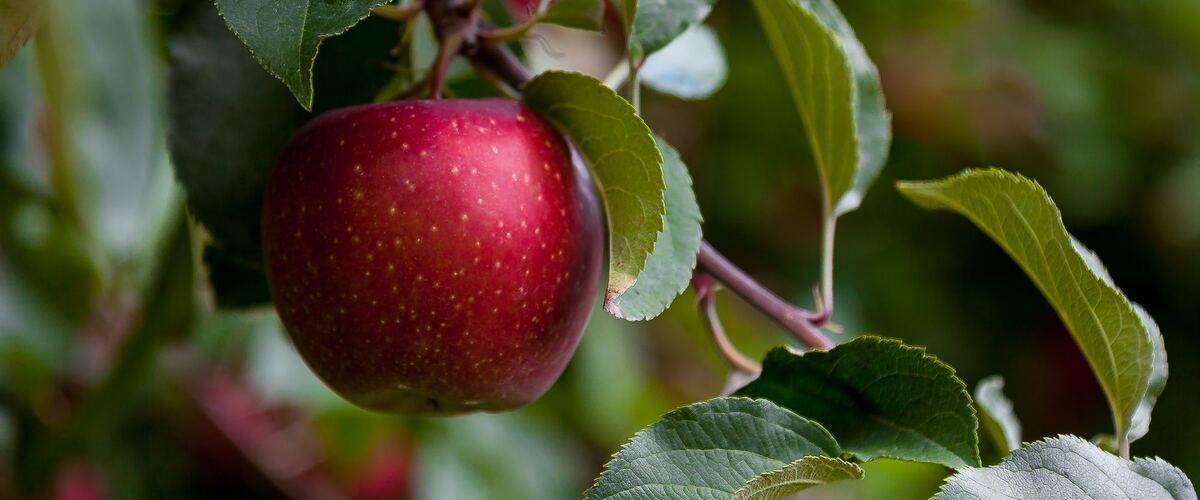
Oregon · Washington · Idaho
When to plant apple trees
Plant in the garden: Portland and Seattle Mar 1 – Apr 26; Spokane Apr 1 – May 27; Boise Mar 20 – May 15; Bend Apr 28 – Jun 23.
Your dates in
Apple trees are grown for fruit to eat fresh, bake, and turn into sauce and cider. Each named variety is grafted onto a rootstock that sets the tree's size, from dwarf trees under 8 feet to full-size trees over 20. Washington grows more apples than any other state, mostly in the Wenatchee, Yakima and Okanogan valleys.
Puts apple trees on your free plan, with dates for your town and a spot in your beds.
- Difficulty
- Moderate
- Sun
- Full sun
- Spacing
- 8 to 12 feet apart for dwarf trees, 15 to 20 feet for semi-dwarf
- Planting depth
- Graft union 2 to 3 inches above the soil
- Frost
- Hardy perennial; comes back every year
- First harvest
- First apples in two to four years on dwarf trees, longer on bigger ones
Choose a scab-resistant variety: apple scab spreads in wet Northwest springs and is the main reason backyard apples look rough west of the Cascades. Most apples need a second variety nearby that blooms at the same time.
Apple planting dates
| Towns | Plant in the garden |
|---|---|
| Portland, OR, Seattle and Tacoma, WA | Mar 1 – Apr 26 |
| Spokane, WA | Apr 1 – May 27 |
| Boise and Meridian, ID | Mar 20 – May 15 |
| Bend and Redmond, OR | Apr 28 – Jun 23 |
| Astoria, OR | Mar 25 – May 20 |
Dates for six main cities. For any of the other 80 towns, type it in the box at the top of the page or browse all towns.
| Gresham, OR, Oregon City and West Linn, OR, Portland, OR, St. Helens and Scappoose, OR, Wilsonville and Canby, OR | Mar 1 – Apr 26 |
|---|---|
| Hillsboro and Beaverton, OR | Mar 5 – Apr 30 |
| Corvallis and Albany, OR, Eugene, OR, Salem, OR | Mar 1 – Apr 26 |
|---|---|
| Cottage Grove, OR | Mar 13 – May 8 |
| McMinnville and Newberg, OR | Mar 4 – Apr 29 |
| Ashland and Talent, OR | Mar 25 – May 20 |
|---|---|
| Grants Pass, OR, Medford, OR, Roseburg, OR | Mar 1 – Apr 26 |
| Astoria, OR, Brookings and Gold Beach, OR, Coos Bay and North Bend, OR, Newport and Lincoln City, OR, Tillamook, OR | Mar 25 – May 20 |
|---|
| Bend and Redmond, OR, Klamath Falls, OR | Apr 28 – Jun 23 |
|---|---|
| Burns, OR | Apr 30 – Jun 25 |
| Lakeview, OR | Apr 23 – Jun 18 |
| Madras, OR, Prineville, OR | Apr 20 – Jun 15 |
| Baker City, OR, Enterprise and Joseph, OR, John Day, OR | Apr 20 – Jun 15 |
|---|---|
| Hermiston, OR, Hood River, OR, Ontario, OR, Pendleton, OR, The Dalles, OR | Mar 20 – May 15 |
| La Grande, OR | Apr 1 – May 27 |
| Bremerton and Port Orchard, WA, Everett, WA, Kent, Renton and Auburn, WA, Seattle and Tacoma, WA | Mar 1 – Apr 26 |
|---|---|
| Olympia, WA | Mar 18 – May 13 |
| Shelton, WA | Mar 16 – May 11 |
| Anacortes, WA, Bellingham, WA, Friday Harbor and the San Juans, WA, Mount Vernon and Burlington, WA, Oak Harbor and Whidbey Island, WA | Mar 1 – Apr 26 |
|---|
| Aberdeen and Hoquiam, WA, Forks, WA, Long Beach and Ilwaco, WA | Mar 25 – May 20 |
|---|---|
| Port Angeles, WA, Port Townsend, WA | Mar 1 – Apr 26 |
| Sequim, WA | Mar 10 – May 5 |
| Centralia and Chehalis, WA | Mar 11 – May 6 |
|---|---|
| Longview and Kelso, WA, Vancouver, WA | Mar 1 – Apr 26 |
| Chelan, WA, Wenatchee, WA | Mar 20 – May 15 |
|---|---|
| Leavenworth, WA, Omak and Okanogan, WA | Apr 1 – May 27 |
| Winthrop and Twisp, WA | Apr 3 – May 29 |
| Ellensburg, WA | Apr 1 – May 27 |
|---|---|
| Ephrata and Quincy, WA, Moses Lake, WA, Sunnyside, Grandview and Prosser, WA, Tri-Cities (Pasco, Kennewick, Richland), WA, Walla Walla, WA | Mar 20 – May 15 |
| Goldendale, WA | Apr 7 – Jun 2 |
| Yakima, WA | Mar 27 – May 22 |
| Colville, WA, Pullman, WA, Spokane, WA | Apr 1 – May 27 |
|---|
| Bonners Ferry, ID, Coeur d'Alene and Post Falls, ID, Sandpoint, ID | Apr 1 – May 27 |
|---|
| Lewiston, ID | Mar 20 – May 15 |
|---|---|
| Moscow, ID | Apr 1 – May 27 |
| Boise and Meridian, ID, Emmett, ID, Nampa and Caldwell, ID | Mar 20 – May 15 |
|---|---|
| McCall, ID | May 11 – Jul 6 |
| Burley and Rupert, ID, Idaho Falls, ID, Pocatello, ID, Rexburg, ID, Twin Falls, ID | Apr 1 – May 27 |
|---|---|
| Salmon, ID | Apr 20 – Jun 15 |
Apple year at a glance
| Task | J | F | M | A | M | J | J | A | S | O | N | D |
|---|---|---|---|---|---|---|---|---|---|---|---|---|
| Plant | Mar | Apr | ||||||||||
| Harvest | Aug | Sep | Oct | |||||||||
| In bloom | Apr | May |
Around Portland. Colder towns, especially east of the Cascades, run a few weeks later; the table above has your town's planting dates. Harvest months are for an established plant.
How to grow apple trees
- Pick a sunny spot with soil that drains well, and mix in an inch or two of compost.
- Plant apple trees on your city's dates, 8 to 12 feet apart for dwarf trees, 15 to 20 feet for semi-dwarf. Graft union 2 to 3 inches above the soil.
- Water deeply every week or two through the first two summers. Prune in late winter to an open shape, and thin young fruit to one per cluster in June for bigger apples.
- Harvest: Apples are ripe when the seeds turn brown and the fruit comes off with a gentle lift and twist. Taste one before picking the tree.
Growing apple trees in your part of the Northwest
The same plant behaves differently on the wet west side, the foggy coast and the dry, colder east side.
West-side valleys
Willamette Valley, Puget Sound, southern Oregon
Apple scab spots leaves and fruit in wet springs, so scab-resistant varieties like Liberty and Enterprise save a lot of spraying. Codling moth and apple maggot are the main fruit pests; bagging young fruit works for a backyard tree.
Coast
Oregon and Washington coast
Scab and other leaf diseases thrive in the damp, so scab-resistant varieties are close to essential. Early and mid-season apples ripen more reliably than late ones in the cool summers.
East of the Cascades
Columbia Basin, Yakima, Boise, Spokane, north Idaho
Wenatchee and Yakima are among the country's biggest apple regions, so the climate suits apples well. Codling moth is the main pest, and winter sun can split young trunks on the southwest side; painting them with diluted white latex paint prevents it.
High desert and mountain towns
Central Oregon, high eastern Oregon valleys, McCall, Salmon
Late spring frosts often kill blossoms, so plant on a slope rather than in a low spot, and choose very cold-hardy varieties.
More apple varieties
More widely sold picks that do well somewhere in the Northwest. The tag says which part of the Northwest suits each one best.
Liberty
Highly resistant to apple scab, so it stays clean through wet Northwest springs without spraying. Crisp, juicy, tart-sweet red apples that keep for a couple of months.
Coast and west side
Akane
A small to medium bright red apple with tangy, sprightly flavor. It ripens early, shrugs off scab and mildew better than most, and is a long-time favorite for rainy-side gardens.
West side
Honeycrisp
Explosively crisp, very juicy and sweet with a little tartness, and it stores for months. Trees are cold-hardy but somewhat prone to scab, so give it good airflow on the west side.
East side
Gravenstein
An old favorite for applesauce, pie and cider, with tart, aromatic flavor. Its pollen is sterile, so it needs two other apple varieties nearby, and the fruit does not store long.
West side
Jonagold
Big, honey-sweet apples with a crisp bite, great fresh or baked. Its pollen is sterile, so plant it with two other varieties that bloom at the same time.
Both sides
Gala
Mild, sweet and crunchy, and a hit with kids. It is a good pollinator for other apples, though it is susceptible to scab in wet west-side springs.
East side
How much to grow
How many to plant
Most apples need a second, different variety that blooms at the same time within about 50 feet. A crabapple in a neighbor's yard often counts.
What to expect
A mature dwarf tree gives about 1 to 2 bushels (40 to 80 pounds); a semi-dwarf 3 to 6 bushels.
Storing the harvest
Late varieties keep three to six months in the fridge or a cold garage near 32 to 35°F. Early apples keep only a few weeks.
Key numbers
- 2–4 (dwarf)Years to fruit
- Needs a partnerPollination
- 6.0–7.0Soil pH
- Apple scabBiggest risk
Top care tip: Thin young fruit to one per cluster in June for bigger apples and steady crops each year.
Growing notes
What makes the difference in Northwest gardens, in plain language.
Choosing a variety and rootstock
The rootstock decides how big your tree gets and how soon it fruits. Dwarfing rootstocks such as M9 or M26 keep trees small enough to prune and pick from the ground, and they bear sooner, but they have weak roots and need a permanent stake. Semi-dwarf rootstocks like M7 make a sturdier, freestanding tree that takes a few more years to start.
West of the Cascades, scab resistance matters more than anything else. Liberty shrugs off scab in wet springs, and Akane holds up well too. Honeycrisp and Gravenstein are worth growing for flavor, but expect more spraying or more spotted fruit in rainy years.
Pollination partners
Almost every apple needs pollen from a different variety that blooms at the same time, carried by bees. A neighbor's tree or a crabapple within a few hundred feet often does the job, but planting two compatible varieties is the sure way. Gravenstein produces poor pollen, so it needs two other varieties nearby: one to pollinate it and one to pollinate the partner. Liberty, Akane and Honeycrisp all bloom in the middle of the season and work well together.
Northwest pests and how to stay ahead
Apple scab is a fungus that spreads from last year's fallen leaves during spring rain, so raking and composting leaves in fall cuts the next year's infection a lot. Codling moth larvae tunnel to the core in summer; hang traps in May to see when the moths fly, and bag young fruit in paper or nylon sleeves if you want clean apples without spraying.
Apple maggot also attacks fruit in parts of the region, and some eastern growing areas restrict moving homegrown apples. Picking up dropped fruit every week helps with both maggots and moths.
Good neighbors
Good neighbors
- Another apple variety. Cross-pollination; check that bloom times overlap.
- Low, flowering herbs. Thyme or oregano around the drip line draw bees and keep grass back from the trunk.
Keep apart
- Lawn grass right up to the trunk. Grass competes hard for water, and mowers and trimmers wound the bark. Keep a mulched circle.
Pests and problems
What most often goes wrong with apple trees in Northwest gardens, how to spot it and what to do.
Apple scab
Signs: Dark, olive spots on leaves and scabby fruit in wet springs.
What to do: Plant scab-resistant varieties and rake up fallen leaves in fall.
Codling moth
Signs: Worms tunneling to the core, with brown frass at the hole.
What to do: Bag young fruit in early June, or thin and pick off damaged fruit.
Apple maggot
Signs: Thin brown trails through the flesh.
What to do: Bag young fruit and pick up drops weekly. Washington has apple maggot quarantine areas; don't carry homegrown fruit out of them.
Common questions about growing apple trees
When should I plant apple trees in Oregon, Washington and Idaho?
Plant in the garden: Mar 1 – Apr 26 in Portland and Seattle, Apr 1 – May 27 in Spokane, Mar 20 – May 15 in Boise and Apr 28 – Jun 23 in Bend. Pick your town at the top of the page for your own dates.
Do I need two apple trees?
Usually, yes. Most apples won't set much fruit without pollen from a different variety that blooms at the same time. If a neighbor has an apple or crabapple close by, one tree may be enough, but planting two is the reliable choice.
When should I plant an apple tree in the Northwest?
Plant bare-root trees in late winter and early spring while they're dormant, as soon as the soil isn't soggy. Potted trees can go in later, but they'll need more summer water the first year.
Why are my apples covered in black spots?
That's most likely apple scab, a fungus that thrives in wet Northwest springs. The fruit is still edible once peeled. Rake up fallen leaves each fall and consider a resistant variety like Liberty next time you plant.
See what else to plant in March or April.
 Pear trees
 Plum trees
 Cherry trees
 Peach trees
 Fig trees
 Hazelnut trees
 Asian pear trees
 Persimmon trees
 Quince trees
 Mulberry trees