
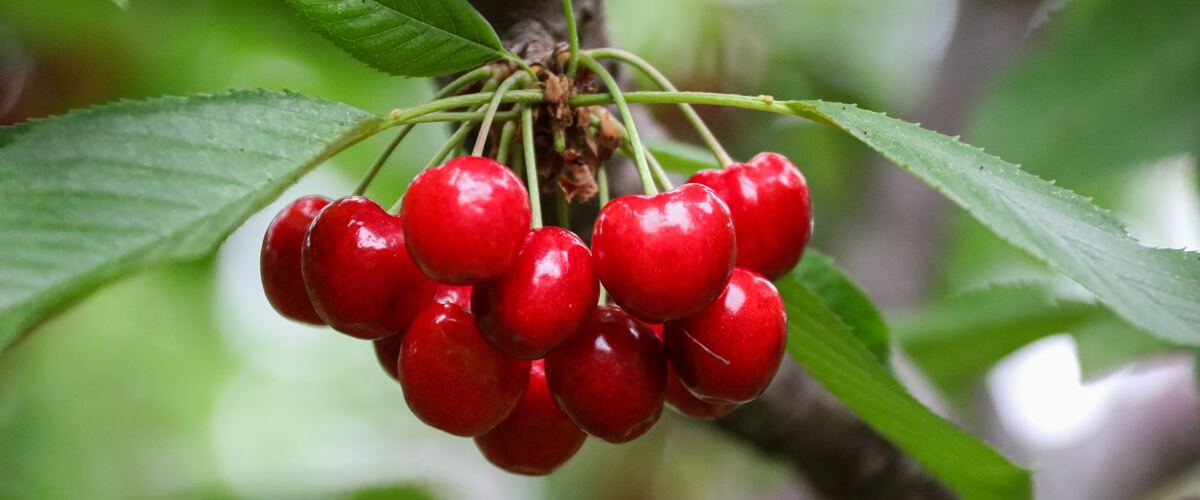
Oregon · Washington · Idaho
When to plant cherry trees
Plant in the garden: Portland and Seattle Mar 1 – Apr 26; Spokane Apr 1 – May 27; Boise Mar 20 – May 15; Bend Apr 28 – Jun 23.
Your dates in
Cherry trees come in two kinds: sweet cherries for fresh eating, like Bing and Rainier, and tart (sour) cherries for pies and preserves. Sweet cherry trees grow large unless grafted onto a dwarfing rootstock, while tart cherries stay smaller and fruit on their own. Both Bing and Rainier were bred in the Northwest, Bing in Oregon in the 1870s and Rainier at Washington State University.
Puts cherry trees on your free plan, with dates for your town and a spot in your beds.
- Difficulty
- Tricky here
- Sun
- Full sun
- Spacing
- 15 to 20 feet apart (8 to 10 feet on dwarf rootstock)
- Planting depth
- Graft union 2 to 3 inches above the soil
- Frost
- Hardy perennial; comes back every year
- First harvest
- First cherries in three to five years
Sweet cherries thrive in the dry summers east of the Cascades. West of the mountains, rain at harvest splits fruit and birds take the rest, so pick crack-resistant, self-fertile varieties or grow sour pie cherries.
Cherry planting dates
| Towns | Plant in the garden |
|---|---|
| Portland, OR, Seattle and Tacoma, WA | Mar 1 – Apr 26 |
| Spokane, WA | Apr 1 – May 27 |
| Boise and Meridian, ID | Mar 20 – May 15 |
| Bend and Redmond, OR | Apr 28 – Jun 23 |
| Astoria, OR | Mar 25 – May 20 |
Dates for six main cities. For any of the other 80 towns, type it in the box at the top of the page or browse all towns.
| Gresham, OR, Oregon City and West Linn, OR, Portland, OR, St. Helens and Scappoose, OR, Wilsonville and Canby, OR | Mar 1 – Apr 26 |
|---|---|
| Hillsboro and Beaverton, OR | Mar 5 – Apr 30 |
| Corvallis and Albany, OR, Eugene, OR, Salem, OR | Mar 1 – Apr 26 |
|---|---|
| Cottage Grove, OR | Mar 13 – May 8 |
| McMinnville and Newberg, OR | Mar 4 – Apr 29 |
| Ashland and Talent, OR | Mar 25 – May 20 |
|---|---|
| Grants Pass, OR, Medford, OR, Roseburg, OR | Mar 1 – Apr 26 |
| Astoria, OR, Brookings and Gold Beach, OR, Coos Bay and North Bend, OR, Newport and Lincoln City, OR, Tillamook, OR | Mar 25 – May 20 |
|---|
| Bend and Redmond, OR, Klamath Falls, OR | Apr 28 – Jun 23 |
|---|---|
| Burns, OR | Apr 30 – Jun 25 |
| Lakeview, OR | Apr 23 – Jun 18 |
| Madras, OR, Prineville, OR | Apr 20 – Jun 15 |
| Baker City, OR, Enterprise and Joseph, OR, John Day, OR | Apr 20 – Jun 15 |
|---|---|
| Hermiston, OR, Hood River, OR, Ontario, OR, Pendleton, OR, The Dalles, OR | Mar 20 – May 15 |
| La Grande, OR | Apr 1 – May 27 |
| Bremerton and Port Orchard, WA, Everett, WA, Kent, Renton and Auburn, WA, Seattle and Tacoma, WA | Mar 1 – Apr 26 |
|---|---|
| Olympia, WA | Mar 18 – May 13 |
| Shelton, WA | Mar 16 – May 11 |
| Anacortes, WA, Bellingham, WA, Friday Harbor and the San Juans, WA, Mount Vernon and Burlington, WA, Oak Harbor and Whidbey Island, WA | Mar 1 – Apr 26 |
|---|
| Aberdeen and Hoquiam, WA, Forks, WA, Long Beach and Ilwaco, WA | Mar 25 – May 20 |
|---|---|
| Port Angeles, WA, Port Townsend, WA | Mar 1 – Apr 26 |
| Sequim, WA | Mar 10 – May 5 |
| Centralia and Chehalis, WA | Mar 11 – May 6 |
|---|---|
| Longview and Kelso, WA, Vancouver, WA | Mar 1 – Apr 26 |
| Chelan, WA, Wenatchee, WA | Mar 20 – May 15 |
|---|---|
| Leavenworth, WA, Omak and Okanogan, WA | Apr 1 – May 27 |
| Winthrop and Twisp, WA | Apr 3 – May 29 |
| Ellensburg, WA | Apr 1 – May 27 |
|---|---|
| Ephrata and Quincy, WA, Moses Lake, WA, Sunnyside, Grandview and Prosser, WA, Tri-Cities (Pasco, Kennewick, Richland), WA, Walla Walla, WA | Mar 20 – May 15 |
| Goldendale, WA | Apr 7 – Jun 2 |
| Yakima, WA | Mar 27 – May 22 |
| Colville, WA, Pullman, WA, Spokane, WA | Apr 1 – May 27 |
|---|
| Bonners Ferry, ID, Coeur d'Alene and Post Falls, ID, Sandpoint, ID | Apr 1 – May 27 |
|---|
| Lewiston, ID | Mar 20 – May 15 |
|---|---|
| Moscow, ID | Apr 1 – May 27 |
| Boise and Meridian, ID, Emmett, ID, Nampa and Caldwell, ID | Mar 20 – May 15 |
|---|---|
| McCall, ID | May 11 – Jul 6 |
| Burley and Rupert, ID, Idaho Falls, ID, Pocatello, ID, Rexburg, ID, Twin Falls, ID | Apr 1 – May 27 |
|---|---|
| Salmon, ID | Apr 20 – Jun 15 |
Cherry year at a glance
| Task | J | F | M | A | M | J | J | A | S | O | N | D |
|---|---|---|---|---|---|---|---|---|---|---|---|---|
| Plant | Mar | Apr | ||||||||||
| Harvest | Jun | Jul | ||||||||||
| In bloom | Mar | Apr |
Around Portland. Colder towns, especially east of the Cascades, run a few weeks later; the table above has your town's planting dates. Harvest months are for an established plant.
How to grow cherry trees
- Pick a sunny spot with soil that drains well, and mix in an inch or two of compost.
- Plant cherry trees on your city's dates, 15 to 20 feet apart (8 to 10 feet on dwarf rootstock). Graft union 2 to 3 inches above the soil.
- Choose a dwarfing rootstock like Gisela so you can net the tree. Water deeply through the first two summers, and prune in summer during dry weather to reduce canker.
- Harvest: Pick sweet cherries when they're fully colored and taste sweet; they don't ripen after picking. Keep the stems on for longer storage.
Growing cherry trees in your part of the Northwest
The same plant behaves differently on the wet west side, the foggy coast and the dry, colder east side.
West-side valleys
Willamette Valley, Puget Sound, southern Oregon
Rain near harvest splits ripe sweet cherries, and bacterial canker and brown rot are common. Crack-resistant varieties and covering the tree before ripe fruit gets rained on help. Spotted wing drosophila lays eggs in ripening fruit.
East of the Cascades
Columbia Basin, Yakima, Boise, Spokane, north Idaho
Wenatchee, Yakima and The Dalles are major sweet cherry regions. Western cherry fruit fly is the main pest, and backyard trees near orchards need it controlled.
High desert and mountain towns
Central Oregon, high eastern Oregon valleys, McCall, Salmon
Sweet cherries rarely crop because blossoms freeze. Tart cherries are hardier and bloom a little later.
More cherry varieties
More widely sold picks that do well somewhere in the Northwest. The tag says which part of the Northwest suits each one best.
Lapins
Large, dark red, firm cherries similar to Bing in flavor. Self-fertile and resistant to cracking in rain, it is one of the best choices for wet west-side summers.
West side
Stella
A dark red, heart-shaped sweet cherry that sets fruit without a partner and pollinates many others. A reliable, easy choice for a single backyard tree.
Both sides
Rainier
Large yellow cherries with a red blush and very sweet, mild flesh. It needs a pollinator such as Bing or Lapins and does best in drier east-side summers where rain cracking is less of a risk.
East side
Montmorency
The classic bright red tart cherry for pies, jam and freezing. Self-fertile, cold-hardy and less attractive to birds than sweet cherries, with a smaller, easy-to-net tree.
Both sides
Bing
The famous large, dark mahogany cherry with rich, sweet flavor. It cracks badly in rain and needs a pollinator, so it suits drier east-side gardens best.
East side
Black Tartarian
An heirloom with small to medium, soft, very sweet purple-black cherries that ripen early. Widely planted as a pollinator for other sweet cherries, including Bing and Rainier.
Both sides
Sweetheart
Firm, bright red, heart-shaped cherries that ripen late and extend the season. Self-fertile and productive, with fair resistance to cracking.
Both sides
How much to grow
How many to plant
Many sweet cherries need a second variety; 'Lapins' and 'Stella' are self-fertile. Sour cherries are self-fertile.
What to expect
A dwarf sweet cherry gives roughly 15 to 30 pounds once mature; a full-size tree several times that.
Storing the harvest
Keep unwashed in the fridge for a week or two. Pit and freeze extras.
Key numbers
- 3–5Years to fruit
- Gisela, 8–10 ft apartDwarf rootstock
- Lapins, StellaSelf-fertile picks
- Rain cracking, birdsBiggest risk
Top care tip: Prune in summer during dry weather rather than winter, which lowers the risk of canker.
Growing notes
What makes the difference in Northwest gardens, in plain language.
Choosing a variety and rootstock
Sweet cherries on standard rootstock grow into big trees that are impossible to net, so most backyard growers choose a dwarfing Gisela rootstock. These trees stay small enough to cover with bird netting and fruit sooner. They do need good soil, steady water and usually a stake.
Self-fertile varieties like Lapins and Stella fruit on their own and can also pollinate Rainier, which needs a partner. Sour cherries such as Montmorency are self-fertile, bloom later, resist cracking and make the best pies, which makes them a reliable choice for rainy west-side gardens.
East vs west of the Cascades
Cherries love the dry, sunny summers east of the Cascades, which is why the region's commercial orchards are there. West of the mountains, a rainy spell near harvest lets ripe cherries absorb water through their skins until they split. Crack-resistant varieties like Lapins help, as does a tree small enough to cover with a tarp before rain.
Bacterial canker is also more common on the wet side. It shows up as oozing gum and dying branches in spring. Prune only in dry summer weather, never in winter.
Pests and harvest
Birds are the biggest cherry thief. Net the whole tree just as fruit starts to color, and tuck the netting closed underneath. Cherry fruit fly and spotted wing drosophila lay eggs in ripening fruit; picking promptly and cleaning up fallen fruit both help.
Cherries don't ripen after picking, so taste a few before harvesting. Pick with the stems attached and refrigerate right away: they keep about a week cold, and much less on the counter.
Good neighbors
Good neighbors
- A compatible pollinizer. Check charts; not every pair works.
Pests and problems
What most often goes wrong with cherry trees in Northwest gardens, how to spot it and what to do.
Birds
Signs: Fruit eaten as it colors.
What to do: Net small trees.
Cherry fruit fly and spotted wing drosophila
Signs: Maggots in ripe fruit.
What to do: Pick promptly and clean up all dropped fruit.
Rain cracking
Signs: Split fruit after rain near harvest.
What to do: Grow crack-resistant varieties west of the Cascades.
Common questions about growing cherry trees
When should I plant cherry trees in Oregon, Washington and Idaho?
Plant in the garden: Mar 1 – Apr 26 in Portland and Seattle, Apr 1 – May 27 in Spokane, Mar 20 – May 15 in Boise and Apr 28 – Jun 23 in Bend. Pick your town at the top of the page for your own dates.
Why do my cherries split before they're ripe?
Rain on ripening cherries is soaked up through the skin until the fruit bursts. Grow crack-resistant varieties like Lapins, keep the tree small enough to cover before rain, or grow sour cherries, which crack less.
Do I need two cherry trees?
Not if you plant a self-fertile variety like Lapins or Stella. Many other sweet cherries, including Rainier, need a different variety nearby that blooms at the same time.
How do I keep birds off my cherry tree?
Drape bird netting over the whole tree as the fruit begins to color and close it at the bottom. That's why a dwarf rootstock like Gisela is so useful: you can actually reach over the tree.
See what else to plant in March or April.
 Apple trees
 Pear trees
 Plum trees
 Peach trees
 Fig trees
 Hazelnut trees
 Asian pear trees
 Persimmon trees
 Quince trees
 Mulberry trees