
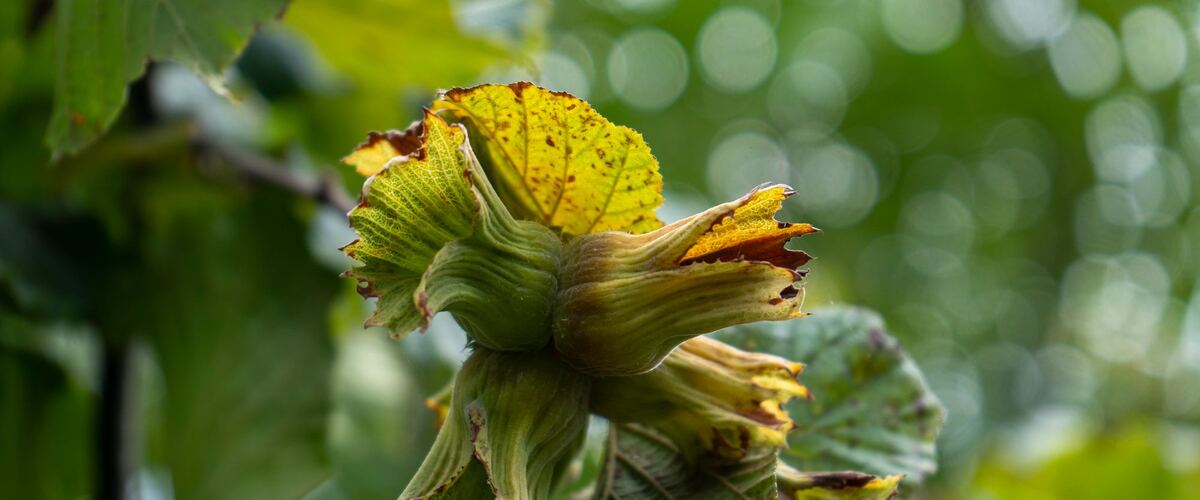
Oregon · Washington · Idaho
When to plant hazelnut trees
Plant in the garden: Portland and Seattle Mar 1 – Apr 26; Spokane Apr 1 – May 27; Boise Mar 20 – May 15; Bend Apr 28 – Jun 23.
Your dates in
Hazelnuts, also called filberts, grow on small, multi-stemmed trees or large shrubs, and the nuts are eaten roasted, used in baking or ground into spreads. They ripen in late summer and drop in fall, when they're gathered from the ground. The hazelnut is Oregon's official state nut.
Puts hazelnut trees on your free plan, with dates for your town and a spot in your beds.
- Difficulty
- Easy
- Sun
- Full sun
- Spacing
- 15 to 20 feet apart
- Planting depth
- Same depth as in the nursery
- Frost
- Hardy perennial; comes back every year
- First harvest
- First nuts in three to five years
Oregon's Willamette Valley grows nearly all of America's hazelnuts. Plant varieties resistant to eastern filbert blight, and plant at least two that pollinate each other.
Hazelnut planting dates
| Towns | Plant in the garden |
|---|---|
| Portland, OR, Seattle and Tacoma, WA | Mar 1 – Apr 26 |
| Spokane, WA | Apr 1 – May 27 |
| Boise and Meridian, ID | Mar 20 – May 15 |
| Bend and Redmond, OR | Apr 28 – Jun 23 |
| Astoria, OR | Mar 25 – May 20 |
Dates for six main cities. For any of the other 80 towns, type it in the box at the top of the page or browse all towns.
| Gresham, OR, Oregon City and West Linn, OR, Portland, OR, St. Helens and Scappoose, OR, Wilsonville and Canby, OR | Mar 1 – Apr 26 |
|---|---|
| Hillsboro and Beaverton, OR | Mar 5 – Apr 30 |
| Corvallis and Albany, OR, Eugene, OR, Salem, OR | Mar 1 – Apr 26 |
|---|---|
| Cottage Grove, OR | Mar 13 – May 8 |
| McMinnville and Newberg, OR | Mar 4 – Apr 29 |
| Ashland and Talent, OR | Mar 25 – May 20 |
|---|---|
| Grants Pass, OR, Medford, OR, Roseburg, OR | Mar 1 – Apr 26 |
| Astoria, OR, Brookings and Gold Beach, OR, Coos Bay and North Bend, OR, Newport and Lincoln City, OR, Tillamook, OR | Mar 25 – May 20 |
|---|
| Bend and Redmond, OR, Klamath Falls, OR | Apr 28 – Jun 23 |
|---|---|
| Burns, OR | Apr 30 – Jun 25 |
| Lakeview, OR | Apr 23 – Jun 18 |
| Madras, OR, Prineville, OR | Apr 20 – Jun 15 |
| Baker City, OR, Enterprise and Joseph, OR, John Day, OR | Apr 20 – Jun 15 |
|---|---|
| Hermiston, OR, Hood River, OR, Ontario, OR, Pendleton, OR, The Dalles, OR | Mar 20 – May 15 |
| La Grande, OR | Apr 1 – May 27 |
| Bremerton and Port Orchard, WA, Everett, WA, Kent, Renton and Auburn, WA, Seattle and Tacoma, WA | Mar 1 – Apr 26 |
|---|---|
| Olympia, WA | Mar 18 – May 13 |
| Shelton, WA | Mar 16 – May 11 |
| Anacortes, WA, Bellingham, WA, Friday Harbor and the San Juans, WA, Mount Vernon and Burlington, WA, Oak Harbor and Whidbey Island, WA | Mar 1 – Apr 26 |
|---|
| Aberdeen and Hoquiam, WA, Forks, WA, Long Beach and Ilwaco, WA | Mar 25 – May 20 |
|---|---|
| Port Angeles, WA, Port Townsend, WA | Mar 1 – Apr 26 |
| Sequim, WA | Mar 10 – May 5 |
| Centralia and Chehalis, WA | Mar 11 – May 6 |
|---|---|
| Longview and Kelso, WA, Vancouver, WA | Mar 1 – Apr 26 |
| Chelan, WA, Wenatchee, WA | Mar 20 – May 15 |
|---|---|
| Leavenworth, WA, Omak and Okanogan, WA | Apr 1 – May 27 |
| Winthrop and Twisp, WA | Apr 3 – May 29 |
| Ellensburg, WA | Apr 1 – May 27 |
|---|---|
| Ephrata and Quincy, WA, Moses Lake, WA, Sunnyside, Grandview and Prosser, WA, Tri-Cities (Pasco, Kennewick, Richland), WA, Walla Walla, WA | Mar 20 – May 15 |
| Goldendale, WA | Apr 7 – Jun 2 |
| Yakima, WA | Mar 27 – May 22 |
| Colville, WA, Pullman, WA, Spokane, WA | Apr 1 – May 27 |
|---|
| Bonners Ferry, ID, Coeur d'Alene and Post Falls, ID, Sandpoint, ID | Apr 1 – May 27 |
|---|
| Lewiston, ID | Mar 20 – May 15 |
|---|---|
| Moscow, ID | Apr 1 – May 27 |
| Boise and Meridian, ID, Emmett, ID, Nampa and Caldwell, ID | Mar 20 – May 15 |
|---|---|
| McCall, ID | May 11 – Jul 6 |
| Burley and Rupert, ID, Idaho Falls, ID, Pocatello, ID, Rexburg, ID, Twin Falls, ID | Apr 1 – May 27 |
|---|---|
| Salmon, ID | Apr 20 – Jun 15 |
Hazelnut year at a glance
| Task | J | F | M | A | M | J | J | A | S | O | N | D |
|---|---|---|---|---|---|---|---|---|---|---|---|---|
| Plant | Mar | Apr | ||||||||||
| Harvest | Aug | Sep | Oct | |||||||||
| In bloom | Jan | Feb |
Around Portland. Colder towns, especially east of the Cascades, run a few weeks later; the table above has your town's planting dates. Harvest months are for an established plant.
How to grow hazelnut trees
- Pick a sunny spot with soil that drains well, and mix in an inch or two of compost.
- Plant hazelnut trees on your city's dates, 15 to 20 feet apart. Same depth as in the nursery.
- Plant at least two compatible varieties for pollination. Water through the first two summers, and pull suckers from the base each year if you want a tree rather than a bush.
- Harvest: Nuts drop on their own from late August to October. Rake them up every few days, before squirrels and jays do, and dry them for a couple of weeks.
Growing hazelnut trees in your part of the Northwest
The same plant behaves differently on the wet west side, the foggy coast and the dry, colder east side.
West-side valleys
Willamette Valley, Puget Sound, southern Oregon
The Willamette Valley grows nearly all of the country's hazelnuts. Eastern filbert blight, which kills branches, is the main disease, so plant blight-resistant varieties like Jefferson or Yamhill.
More hazelnut varieties
More widely sold picks that do well somewhere in the Northwest. The tag says which part of the Northwest suits each one best.
Jefferson
Highly resistant to eastern filbert blight, with large nuts and heavy yields. It needs a compatible pollinizer such as Theta or Yamhill nearby.
West side
Yamhill
A smaller, compact tree with high resistance to eastern filbert blight. Its nuts are small but plentiful, ripen early, and it also serves as a pollinizer for other varieties.
West side
Theta
Grown mainly to pollinate Jefferson and other main-crop hazelnuts. It sheds pollen at the right time in late winter and has strong resistance to eastern filbert blight.
West side
McDonald
Resistant to eastern filbert blight, with well-filled, flavorful nuts that are popular for roasting and snacking. Plant with a compatible pollinizer for good crops.
West side
Dorris
A smaller tree with good resistance to eastern filbert blight and round, easy-to-blanch nuts. Its modest size suits home gardens that lack room for a full orchard tree.
West side
Wepster
A heavy-bearing variety with small, round nuts that drop early. Resistant to eastern filbert blight and useful as a partner for other blight-resistant hazelnuts.
West side
How much to grow
How many to plant
Plant at least two compatible varieties for cross-pollination.
What to expect
A mature tree gives roughly 10 to 25 pounds of nuts in the shell.
Storing the harvest
Dry for a couple of weeks, then store in the shell somewhere cool for a year.
Key numbers
- 3–5Years to nuts
- Two compatible typesPollination
- Midwinter, by windBloom time
- Eastern filbert blightBiggest risk
Top care tip: Pull suckers from the base each year if you want a tree, and rake up nuts quickly as they drop.
Growing notes
What makes the difference in Northwest gardens, in plain language.
Pollination and variety choice
Hazelnuts bloom in midwinter, long before most plants wake up. The long, dangling catkins are the male flowers, and the female flowers are tiny red tufts on the buds. Pollen moves by wind, not bees, and a tree can't pollinate itself, so you need at least two compatible varieties within about 50 feet.
Jefferson, Yamhill and McDonald resist eastern filbert blight, the disease that wiped out many older Northwest orchards. Theta is often planted as a pollinizer alongside them. Ask the nursery which varieties pair well, since compatibility depends on the specific types.
Eastern filbert blight
This fungus spreads by spores in wet spring weather and causes rows of black, football-shaped bumps along branches. Over a few years it girdles and kills limbs, and eventually whole trees. Older varieties like Barcelona are very susceptible, which is why blight-resistant varieties are the only sensible choice for new plantings.
If you see cankers on an older tree, cut the branch off in dry weather several feet below the visible damage and burn or bag it.
Bush or tree, and harvest
Hazelnuts naturally grow as multi-stemmed bushes. If you want a single-trunk tree that's easier to rake under, pull suckers from the base every year. The Northwest also has a native beaked hazelnut, which grows wild in woods west of the Cascades and makes a good wildlife shrub.
Nuts drop from late August to October. Rake them up every few days before squirrels and jays get them, then spread them in a single layer somewhere dry and airy for a couple of weeks, until the kernels snap cleanly.
Good neighbors
Good neighbors
- Another compatible variety. Wind-pollination needs a partner.
Pests and problems
What most often goes wrong with hazelnut trees in Northwest gardens, how to spot it and what to do.
Eastern filbert blight
Signs: Rows of black cankers on branches.
What to do: Plant blight-resistant varieties.
Squirrels and jays
Signs: Nuts gone before you pick them up.
What to do: Rake up nuts every few days.
Filbertworm
Signs: Holes in the shells and worms inside.
What to do: Pick up nuts promptly.
Common questions about growing hazelnut trees
When should I plant hazelnut trees in Oregon, Washington and Idaho?
Plant in the garden: Mar 1 – Apr 26 in Portland and Seattle, Apr 1 – May 27 in Spokane, Mar 20 – May 15 in Boise and Apr 28 – Jun 23 in Bend. Pick your town at the top of the page for your own dates.
Do I need two hazelnut trees?
Yes. Hazelnuts can't pollinate themselves, so plant at least two compatible varieties, such as Jefferson with Yamhill or Theta. They should be within about 50 feet of each other.
Are filberts and hazelnuts the same thing?
Yes. Filbert is the older name used by many Northwest growers, and hazelnut is the common name elsewhere. They're the same nut.
How do I keep squirrels from taking my hazelnuts?
Pick up fallen nuts every few days during harvest so squirrels and jays don't get to them first. Spreading a tarp under the tree makes gathering faster.
See what else to plant in March or April.
 Apple trees
 Pear trees
 Plum trees
 Cherry trees
 Peach trees
 Fig trees
 Asian pear trees
 Persimmon trees
 Quince trees
 Mulberry trees