
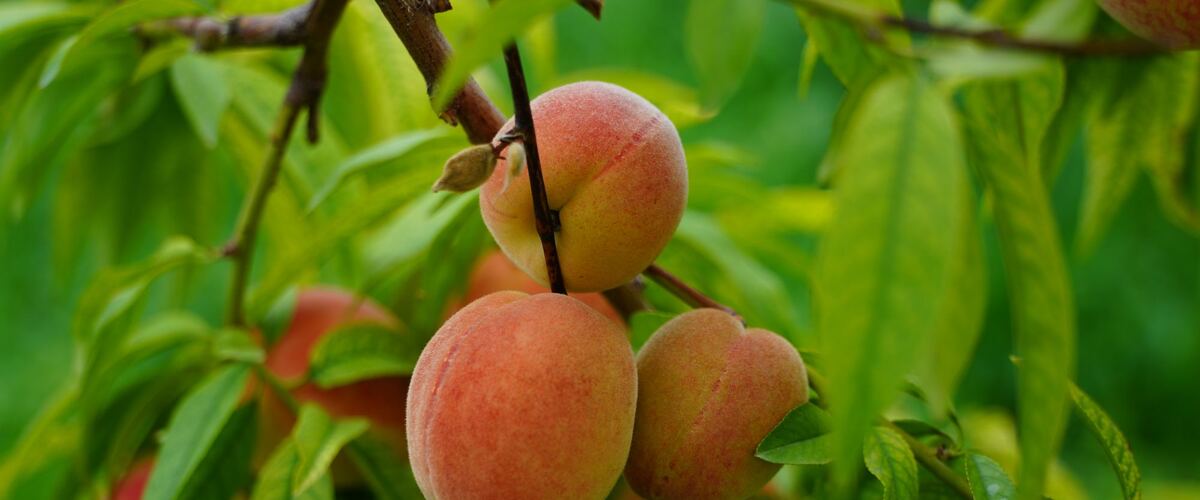
Oregon · Washington · Idaho
When to plant peach trees
Plant in the garden: Portland and Seattle Mar 1 – Apr 26; Spokane Apr 1 – May 27; Boise Mar 20 – May 15; Bend Apr 28 – Jun 23.
Your dates in
Peach trees are fairly short-lived fruit trees, often bearing for 10 to 15 years, grown for juicy summer fruit eaten fresh, canned or baked. Freestone peaches pull away from the pit for easy slicing, while clingstones hold on and are mostly canned. Nectarines are the same species with smooth, fuzzless skin.
Puts peach trees on your free plan, with dates for your town and a spot in your beds.
- Difficulty
- Tricky here
- Sun
- Full sun; the hottest spot you have
- Spacing
- 12 to 15 feet apart (8 to 10 for dwarf)
- Planting depth
- Graft union 2 to 3 inches above the soil
- Frost
- Hardy perennial; comes back every year
- First harvest
- First peaches in two to four years
West of the Cascades, peach leaf curl is the big problem, so plant a curl-resistant variety like Frost, Q-1-8 or Charlotte. The warm eastern valleys grow excellent peaches.
Peach planting dates
| Towns | Plant in the garden |
|---|---|
| Portland, OR, Seattle and Tacoma, WA | Mar 1 – Apr 26 |
| Spokane, WA | Apr 1 – May 27 |
| Boise and Meridian, ID | Mar 20 – May 15 |
| Bend and Redmond, OR | Apr 28 – Jun 23 |
| Astoria, OR | Mar 25 – May 20 |
Dates for six main cities. For any of the other 80 towns, type it in the box at the top of the page or browse all towns.
| Gresham, OR, Oregon City and West Linn, OR, Portland, OR, St. Helens and Scappoose, OR, Wilsonville and Canby, OR | Mar 1 – Apr 26 |
|---|---|
| Hillsboro and Beaverton, OR | Mar 5 – Apr 30 |
| Corvallis and Albany, OR, Eugene, OR, Salem, OR | Mar 1 – Apr 26 |
|---|---|
| Cottage Grove, OR | Mar 13 – May 8 |
| McMinnville and Newberg, OR | Mar 4 – Apr 29 |
| Ashland and Talent, OR | Mar 25 – May 20 |
|---|---|
| Grants Pass, OR, Medford, OR, Roseburg, OR | Mar 1 – Apr 26 |
| Astoria, OR, Brookings and Gold Beach, OR, Coos Bay and North Bend, OR, Newport and Lincoln City, OR, Tillamook, OR | Mar 25 – May 20 |
|---|
| Bend and Redmond, OR, Klamath Falls, OR | Apr 28 – Jun 23 |
|---|---|
| Burns, OR | Apr 30 – Jun 25 |
| Lakeview, OR | Apr 23 – Jun 18 |
| Madras, OR, Prineville, OR | Apr 20 – Jun 15 |
| Baker City, OR, Enterprise and Joseph, OR, John Day, OR | Apr 20 – Jun 15 |
|---|---|
| Hermiston, OR, Hood River, OR, Ontario, OR, Pendleton, OR, The Dalles, OR | Mar 20 – May 15 |
| La Grande, OR | Apr 1 – May 27 |
| Bremerton and Port Orchard, WA, Everett, WA, Kent, Renton and Auburn, WA, Seattle and Tacoma, WA | Mar 1 – Apr 26 |
|---|---|
| Olympia, WA | Mar 18 – May 13 |
| Shelton, WA | Mar 16 – May 11 |
| Anacortes, WA, Bellingham, WA, Friday Harbor and the San Juans, WA, Mount Vernon and Burlington, WA, Oak Harbor and Whidbey Island, WA | Mar 1 – Apr 26 |
|---|
| Aberdeen and Hoquiam, WA, Forks, WA, Long Beach and Ilwaco, WA | Mar 25 – May 20 |
|---|---|
| Port Angeles, WA, Port Townsend, WA | Mar 1 – Apr 26 |
| Sequim, WA | Mar 10 – May 5 |
| Centralia and Chehalis, WA | Mar 11 – May 6 |
|---|---|
| Longview and Kelso, WA, Vancouver, WA | Mar 1 – Apr 26 |
| Chelan, WA, Wenatchee, WA | Mar 20 – May 15 |
|---|---|
| Leavenworth, WA, Omak and Okanogan, WA | Apr 1 – May 27 |
| Winthrop and Twisp, WA | Apr 3 – May 29 |
| Ellensburg, WA | Apr 1 – May 27 |
|---|---|
| Ephrata and Quincy, WA, Moses Lake, WA, Sunnyside, Grandview and Prosser, WA, Tri-Cities (Pasco, Kennewick, Richland), WA, Walla Walla, WA | Mar 20 – May 15 |
| Goldendale, WA | Apr 7 – Jun 2 |
| Yakima, WA | Mar 27 – May 22 |
| Colville, WA, Pullman, WA, Spokane, WA | Apr 1 – May 27 |
|---|
| Bonners Ferry, ID, Coeur d'Alene and Post Falls, ID, Sandpoint, ID | Apr 1 – May 27 |
|---|
| Lewiston, ID | Mar 20 – May 15 |
|---|---|
| Moscow, ID | Apr 1 – May 27 |
| Boise and Meridian, ID, Emmett, ID, Nampa and Caldwell, ID | Mar 20 – May 15 |
|---|---|
| McCall, ID | May 11 – Jul 6 |
| Burley and Rupert, ID, Idaho Falls, ID, Pocatello, ID, Rexburg, ID, Twin Falls, ID | Apr 1 – May 27 |
|---|---|
| Salmon, ID | Apr 20 – Jun 15 |
Peach year at a glance
| Task | J | F | M | A | M | J | J | A | S | O | N | D |
|---|---|---|---|---|---|---|---|---|---|---|---|---|
| Plant | Mar | Apr | ||||||||||
| Harvest | Jul | Aug | Sep | |||||||||
| In bloom | Mar |
Around Portland. Colder towns, especially east of the Cascades, run a few weeks later; the table above has your town's planting dates. Harvest months are for an established plant.
How to grow peach trees
- Pick a sunny spot with soil that drains well, and mix in an inch or two of compost.
- Plant peach trees on your city's dates, 12 to 15 feet apart (8 to 10 for dwarf). Graft union 2 to 3 inches above the soil.
- Peaches fruit on last year's growth, so prune every late winter to keep new wood coming. Thin young fruit to 6 to 8 inches apart for good-sized peaches.
- Harvest: Pick when the green background color turns fully yellow and the fruit gives slightly to gentle pressure.
Growing peach trees in your part of the Northwest
The same plant behaves differently on the wet west side, the foggy coast and the dry, colder east side.
West-side valleys
Willamette Valley, Puget Sound, southern Oregon
Peach leaf curl, which puckers and reddens spring leaves, is the main problem in wet springs. Spray copper as leaves drop in fall and again before buds swell, or plant resistant varieties like Frost.
Coast
Oregon and Washington coast
Peach leaf curl and cool summers make peaches very hard on most of the coast.
East of the Cascades
Columbia Basin, Yakima, Boise, Spokane, north Idaho
Yakima, Wenatchee and the Treasure Valley grow peaches commercially. Peaches bloom early, so late spring frosts are the main risk to the crop.
High desert and mountain towns
Central Oregon, high eastern Oregon valleys, McCall, Salmon
Peaches bloom so early that late frosts usually kill the flowers. A tree may only fruit in occasional years.
More peach varieties
More widely sold picks that do well somewhere in the Northwest. The tag says which part of the Northwest suits each one best.
Frost
Resistant to peach leaf curl, so it can be grown in rainy west-side gardens without heavy spraying. Medium yellow freestone fruit with good, sweet flavor.
West side
Q-1-8
A white-fleshed, sweet, juicy semi-freestone peach with strong resistance to leaf curl. It was selected for wet Northwest conditions and is a top pick for the west side.
West side
Charlotte
A yellow freestone peach that resists leaf curl and bears well in the maritime Northwest. Sweet, juicy fruit good for eating, canning and freezing.
West side
Redhaven
One of the most widely planted peaches anywhere, with firm, sweet, red-blushed yellow fruit. It is cold-hardy but prone to leaf curl, so it does best in drier east-side climates.
East side
Avalon Pride
Found in Washington and prized for its strong resistance to peach leaf curl. Sweet, juicy yellow semi-freestone fruit ripens early, which helps in cool west-side summers.
West side
Elberta
The old standard canning peach, with large, golden freestone fruit. It needs a long, hot summer to ripen well and is best suited to warm east-side valleys.
East side
How much to grow
How many to plant
One tree is enough; most peaches are self-fertile.
What to expect
A mature semi-dwarf tree gives about 1 to 3 bushels.
Storing the harvest
Keep ripe peaches a few days in the fridge. Slice and freeze or can extras.
Key numbers
- 2–4Years to fruit
- Self-fertilePollination
- 6–8 inches apartThin fruit to
- Peach leaf curlBiggest risk
Top care tip: Prune every late winter to keep new wood coming, because peaches fruit on last year's growth.
Growing notes
What makes the difference in Northwest gardens, in plain language.
Peach leaf curl and how to beat it
Peach leaf curl is a fungus that infects swelling buds during cool, wet weather in late winter. The leaves come out red, thick and puckered, then drop, and repeated attacks weaken the tree. It's the main reason peaches struggle west of the Cascades.
Planting a curl-resistant variety like Frost, Q-1-8 or Charlotte is the easiest answer. Many growers also spray copper fungicide once leaves have fallen in late fall and again before buds swell in late winter. Keeping winter and spring rain off the tree, with a roof overhang or a simple cover, works too, because the fungus needs wet buds to infect.
Pruning for fruit every year
Peaches fruit only on shoots that grew the previous summer. A tree that isn't pruned produces less new wood each year, and the fruit moves out to the tips of the branches. Prune every late winter to an open, vase-like shape, removing about a third to half of last year's growth so new shoots keep coming.
Peaches set far more fruit than they can size up. Thin young peaches to 6 to 8 inches apart when they're about the size of a marble. The crop looks smaller, but the peaches are bigger, sweeter and less likely to break branches.
East vs west of the Cascades
Peaches need summer heat to grow sweet fruit. The hot valleys east of the Cascades grow excellent peaches, including Redhaven, but cold winters and spring frosts can kill buds, so avoid low frost pockets. West of the mountains, put peaches in your hottest, sunniest spot and stick to curl-resistant varieties. Peach tree borers, which tunnel into the base of the trunk and leave gummy sawdust, are a pest on both sides.
Good neighbors
Good neighbors
- A sheltered spot. An overhang or wall keeps spring rain off and reduces leaf curl.
Pests and problems
What most often goes wrong with peach trees in Northwest gardens, how to spot it and what to do.
Peach leaf curl
Signs: Red, puckered leaves in spring.
What to do: Resistant varieties, or keep rain off the tree in late winter.
Brown rot
Signs: Rotting fruit in wet weather.
What to do: Thin fruit so they don't touch.
Peach tree borer
Signs: Gummy sawdust at the base of the trunk.
What to do: Check the trunk base in summer and dig out larvae.
Common questions about growing peach trees
When should I plant peach trees in Oregon, Washington and Idaho?
Plant in the garden: Mar 1 – Apr 26 in Portland and Seattle, Apr 1 – May 27 in Spokane, Mar 20 – May 15 in Boise and Apr 28 – Jun 23 in Bend. Pick your town at the top of the page for your own dates.
Why are my peach leaves red and curled?
That's peach leaf curl, a fungus that infected the buds during wet weather the previous late winter. Spraying now won't fix it; the tree will usually push out a second set of healthy leaves. Prevent it next year with a resistant variety, copper spray in late fall and late winter, or a cover over the tree.
Do I need two peach trees?
No. Most peaches are self-fertile, so a single tree will produce fruit on its own.
Can you grow peaches west of the Cascades?
Yes, if you choose a curl-resistant variety like Frost, Q-1-8 or Charlotte and plant it in your warmest, sunniest spot. Fruit is often smaller and less sweet than east-side peaches, but still very good.
See what else to plant in March or April.
 Apple trees
 Pear trees
 Plum trees
 Cherry trees
 Fig trees
 Hazelnut trees
 Asian pear trees
 Persimmon trees
 Quince trees
 Mulberry trees