
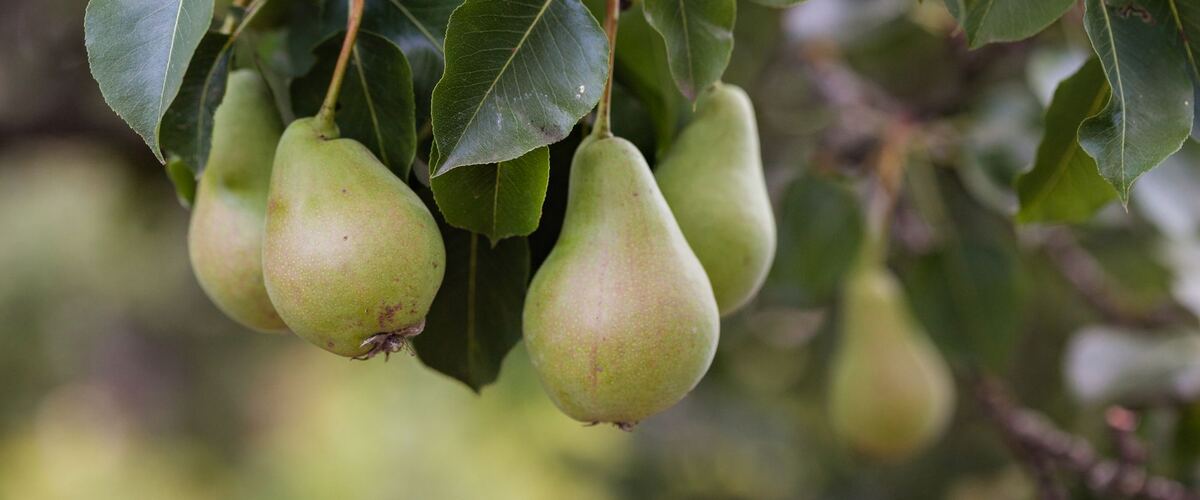
Oregon · Washington · Idaho
When to plant pear trees
Plant in the garden: Portland and Seattle Mar 1 – Apr 26; Spokane Apr 1 – May 27; Boise Mar 20 – May 15; Bend Apr 28 – Jun 23.
Your dates in
Pear trees are long-lived fruit trees grown for buttery European pears like Bartlett, Bosc and Comice, eaten fresh, baked or canned. They bloom earlier in spring than apples. Oregon's Hood River Valley and Washington's Wenatchee and Yakima valleys are among the country's main pear-growing areas.
Puts pear trees on your free plan, with dates for your town and a spot in your beds.
- Difficulty
- Easy
- Sun
- Full sun
- Spacing
- 12 to 15 feet apart for dwarf trees, 18 to 20 feet for standard
- Planting depth
- Graft union 2 to 3 inches above the soil
- Frost
- Hardy perennial; comes back every year
- First harvest
- First pears in three to five years
One of the easiest fruit trees for west-side gardens. Plant two varieties that bloom together, and pick European pears while still hard, then ripen them indoors.
Pear planting dates
| Towns | Plant in the garden |
|---|---|
| Portland, OR, Seattle and Tacoma, WA | Mar 1 – Apr 26 |
| Spokane, WA | Apr 1 – May 27 |
| Boise and Meridian, ID | Mar 20 – May 15 |
| Bend and Redmond, OR | Apr 28 – Jun 23 |
| Astoria, OR | Mar 25 – May 20 |
Dates for six main cities. For any of the other 80 towns, type it in the box at the top of the page or browse all towns.
| Gresham, OR, Oregon City and West Linn, OR, Portland, OR, St. Helens and Scappoose, OR, Wilsonville and Canby, OR | Mar 1 – Apr 26 |
|---|---|
| Hillsboro and Beaverton, OR | Mar 5 – Apr 30 |
| Corvallis and Albany, OR, Eugene, OR, Salem, OR | Mar 1 – Apr 26 |
|---|---|
| Cottage Grove, OR | Mar 13 – May 8 |
| McMinnville and Newberg, OR | Mar 4 – Apr 29 |
| Ashland and Talent, OR | Mar 25 – May 20 |
|---|---|
| Grants Pass, OR, Medford, OR, Roseburg, OR | Mar 1 – Apr 26 |
| Astoria, OR, Brookings and Gold Beach, OR, Coos Bay and North Bend, OR, Newport and Lincoln City, OR, Tillamook, OR | Mar 25 – May 20 |
|---|
| Bend and Redmond, OR, Klamath Falls, OR | Apr 28 – Jun 23 |
|---|---|
| Burns, OR | Apr 30 – Jun 25 |
| Lakeview, OR | Apr 23 – Jun 18 |
| Madras, OR, Prineville, OR | Apr 20 – Jun 15 |
| Baker City, OR, Enterprise and Joseph, OR, John Day, OR | Apr 20 – Jun 15 |
|---|---|
| Hermiston, OR, Hood River, OR, Ontario, OR, Pendleton, OR, The Dalles, OR | Mar 20 – May 15 |
| La Grande, OR | Apr 1 – May 27 |
| Bremerton and Port Orchard, WA, Everett, WA, Kent, Renton and Auburn, WA, Seattle and Tacoma, WA | Mar 1 – Apr 26 |
|---|---|
| Olympia, WA | Mar 18 – May 13 |
| Shelton, WA | Mar 16 – May 11 |
| Anacortes, WA, Bellingham, WA, Friday Harbor and the San Juans, WA, Mount Vernon and Burlington, WA, Oak Harbor and Whidbey Island, WA | Mar 1 – Apr 26 |
|---|
| Aberdeen and Hoquiam, WA, Forks, WA, Long Beach and Ilwaco, WA | Mar 25 – May 20 |
|---|---|
| Port Angeles, WA, Port Townsend, WA | Mar 1 – Apr 26 |
| Sequim, WA | Mar 10 – May 5 |
| Centralia and Chehalis, WA | Mar 11 – May 6 |
|---|---|
| Longview and Kelso, WA, Vancouver, WA | Mar 1 – Apr 26 |
| Chelan, WA, Wenatchee, WA | Mar 20 – May 15 |
|---|---|
| Leavenworth, WA, Omak and Okanogan, WA | Apr 1 – May 27 |
| Winthrop and Twisp, WA | Apr 3 – May 29 |
| Ellensburg, WA | Apr 1 – May 27 |
|---|---|
| Ephrata and Quincy, WA, Moses Lake, WA, Sunnyside, Grandview and Prosser, WA, Tri-Cities (Pasco, Kennewick, Richland), WA, Walla Walla, WA | Mar 20 – May 15 |
| Goldendale, WA | Apr 7 – Jun 2 |
| Yakima, WA | Mar 27 – May 22 |
| Colville, WA, Pullman, WA, Spokane, WA | Apr 1 – May 27 |
|---|
| Bonners Ferry, ID, Coeur d'Alene and Post Falls, ID, Sandpoint, ID | Apr 1 – May 27 |
|---|
| Lewiston, ID | Mar 20 – May 15 |
|---|---|
| Moscow, ID | Apr 1 – May 27 |
| Boise and Meridian, ID, Emmett, ID, Nampa and Caldwell, ID | Mar 20 – May 15 |
|---|---|
| McCall, ID | May 11 – Jul 6 |
| Burley and Rupert, ID, Idaho Falls, ID, Pocatello, ID, Rexburg, ID, Twin Falls, ID | Apr 1 – May 27 |
|---|---|
| Salmon, ID | Apr 20 – Jun 15 |
Pear year at a glance
| Task | J | F | M | A | M | J | J | A | S | O | N | D |
|---|---|---|---|---|---|---|---|---|---|---|---|---|
| Plant | Mar | Apr | ||||||||||
| Harvest | Aug | Sep | Oct | |||||||||
| In bloom | Mar | Apr |
Around Portland. Colder towns, especially east of the Cascades, run a few weeks later; the table above has your town's planting dates. Harvest months are for an established plant.
How to grow pear trees
- Pick a sunny spot with soil that drains well, and mix in an inch or two of compost.
- Plant pear trees on your city's dates, 12 to 15 feet apart for dwarf trees, 18 to 20 feet for standard. Graft union 2 to 3 inches above the soil.
- Water deeply through the first two summers. Pears need little pruning; take out crossing branches in late winter and keep the center open.
- Harvest: Pick European pears when they're full size and lift off easily but are still hard, then ripen them at room temperature. Asian pears ripen on the tree; pick when sweet and crisp.
Growing pear trees in your part of the Northwest
The same plant behaves differently on the wet west side, the foggy coast and the dry, colder east side.
West-side valleys
Willamette Valley, Puget Sound, southern Oregon
Pear scab and fire blight are the main diseases in wet, mild springs. Cut fire-blighted shoots well below the dead wood in dry weather.
East of the Cascades
Columbia Basin, Yakima, Boise, Spokane, north Idaho
Hood River and the Wenatchee valley are major pear regions. Pear psylla and fire blight are the main problems; fire blight spreads fastest when warm spring rain falls during bloom.
High desert and mountain towns
Central Oregon, high eastern Oregon valleys, McCall, Salmon
Pears bloom early, so late frosts often take the crop. European pears are generally hardier than Asian pears here.
More pear varieties
More widely sold picks that do well somewhere in the Northwest. The tag says which part of the Northwest suits each one best.
Bartlett
The classic juicy, buttery yellow pear for eating fresh and canning. Pick it full size but firm and ripen indoors; it sets better crops with another pear variety nearby.
Both sides
Comice
Considered the finest-flavored pear, with sweet, melting, aromatic flesh. It needs a pollinator such as Bartlett and benefits from a few weeks of cold storage before ripening.
Both sides
Seckel
Small, russeted pears with spicy, intensely sweet flavor, ideal for snacking and preserving. The tree is compact and has good resistance to fire blight.
Both sides
Shinseiki
Round, crisp, juicy yellow fruit that ripens on the tree. It bears young and heavily, and it also pollinates other Asian and many European pears.
Both sides
Bosc
Long-necked brown pears with dense, sweet, spicy flesh that holds its shape when baked or poached. It needs another pear for pollination and stores well.
Both sides
D'Anjou
Mild, sweet and juicy, with fruit that keeps in cold storage for months. Plant it with another pear variety for good crops.
Both sides
Chojuro
Golden-brown Asian pears with a rich, almost butterscotch flavor and crisp texture. It stores well for an Asian pear and needs another Asian or European pear for pollination.
Both sides
How much to grow
How many to plant
Most European pears need a second variety that blooms at the same time. Asian pears can pollinate many European varieties.
What to expect
A mature semi-dwarf tree gives about 2 to 4 bushels.
Storing the harvest
Pick hard and keep in the fridge. Bartlett keeps one to two months; d'Anjou and Bosc three to five. Ripen at room temperature for a few days before eating.
Key numbers
- 3–5Years to fruit
- Plant two varietiesPollination
- Mature but still hardPick European pears
- Pear scab, fire blightBiggest risk
Top care tip: Pick European pears when mature but still hard, then ripen them indoors at room temperature.
Growing notes
What makes the difference in Northwest gardens, in plain language.
Choosing varieties that pollinate each other
Pears are some of the most forgiving fruit trees for west-side gardens: they tolerate heavy, damp soil better than most fruit trees and need little spraying. Most European pears need a second variety that blooms at the same time. Bartlett, Comice and Seckel can pollinate each other, though Bartlett and Seckel are a poor match. Asian pears like Shinseiki bloom early, but they often overlap enough with early European pears to help with pollination as well.
Choose a rootstock suited to your space. Dwarfing pear rootstocks still make fairly large trees, so leave room as guide spacing suggests.
Why European pears ripen off the tree
A European pear left on the tree ripens from the inside out and turns gritty or mushy at the core. Pick them when they reach full size and the stem snaps off with a gentle lift, while the flesh is still firm. Bartlett ripens at room temperature in about a week. Comice and Anjou-type pears ripen better after a few weeks in the refrigerator, then a few days on the counter. Check ripeness by pressing gently near the stem: when it gives, it's ready.
Pests and diseases in the Northwest
Pear scab works like apple scab and spreads from fallen leaves in wet springs, so rake leaves each fall. Fire blight is a bacterial disease that thrives in warm, humid weather during bloom; it's more common east of the Cascades. Prune out blackened shoots in dry weather, cutting 8 to 12 inches below the damage and wiping your shears with disinfectant between cuts.
West of the Cascades, pear trellis rust causes bright orange spots on leaves. It spends part of its life on junipers, so it's worse near juniper hedges, and it's mostly cosmetic.
Good neighbors
Good neighbors
- Another pear variety. Cross-pollination.
Keep apart
- Junipers close by. They host pear trellis rust, which spots pear leaves orange.
Pests and problems
What most often goes wrong with pear trees in Northwest gardens, how to spot it and what to do.
Pear scab
Signs: Dark spots on leaves and cracked fruit.
What to do: Rake up fallen leaves and choose resistant varieties.
Fire blight
Signs: Shoot tips blacken and curl like a shepherd's crook.
What to do: Cut 8 to 12 inches below the damage on a dry day and clean pruners between cuts.
Pear slug
Signs: Slimy, dark larvae skeletonizing leaves in summer.
What to do: Hose them off or dust leaves with fine soil or ash.
Common questions about growing pear trees
When should I plant pear trees in Oregon, Washington and Idaho?
Plant in the garden: Mar 1 – Apr 26 in Portland and Seattle, Apr 1 – May 27 in Spokane, Mar 20 – May 15 in Boise and Apr 28 – Jun 23 in Bend. Pick your town at the top of the page for your own dates.
Why are my pears gritty or brown in the middle?
They were left on the tree too long. European pears should be picked while still hard and ripened indoors. Pick when the fruit reaches full size and lifts off the branch easily.
Do I need two pear trees?
For most European pears, yes. Plant two varieties that bloom at the same time, such as Bartlett and Comice. A neighbor's pear tree nearby can also do the job.
How long can you store homegrown pears?
Bartlett keeps for a few weeks in the refrigerator, while Comice and other winter pears can keep for a couple of months. Bring them out a few days before you want to eat them so they can soften.
See what else to plant in March or April.
 Apple trees
 Plum trees
 Cherry trees
 Peach trees
 Fig trees
 Hazelnut trees
 Asian pear trees
 Persimmon trees
 Quince trees
 Mulberry trees