
Oregon · Washington · Idaho
When to plant red-flowering currant
Plant in the garden: Portland and Seattle Mar 1 – Apr 26; Spokane Apr 1 – May 27; Boise Mar 20 – May 15; Bend Apr 28 – Jun 23.
Your dates in
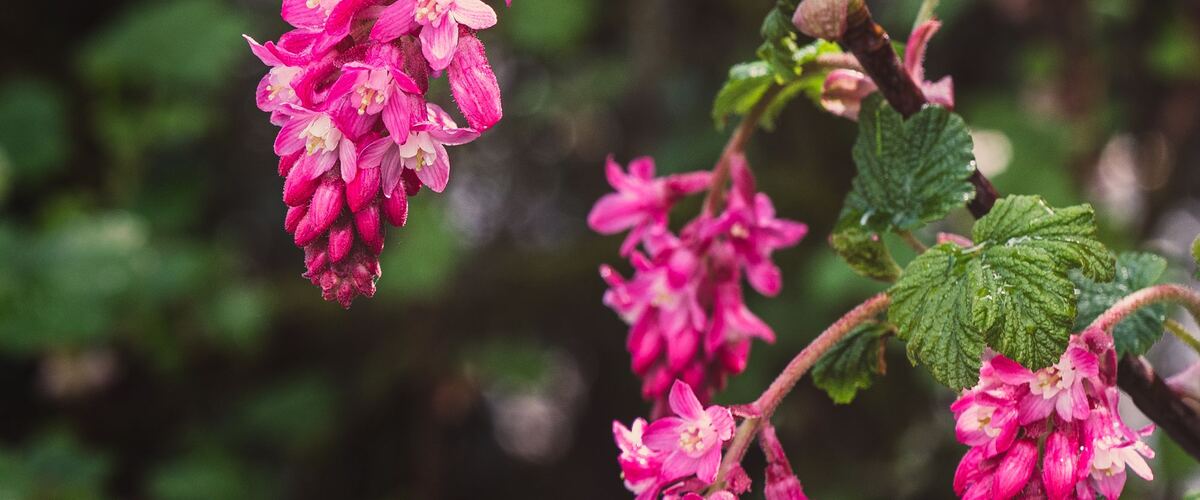
Red-flowering currant is a native deciduous shrub, usually 5 to 10 feet tall, grown mainly for its hanging clusters of pink to deep red flowers. Its small blue-black berries are edible but bland and mostly eaten by birds. Botanist David Douglas sent it to Britain in the 1820s, and it's still a common garden shrub there.
Puts red-flowering currant on your free plan, with dates for your town and a spot in your beds.
- Difficulty
- Easy
- Sun
- Full sun to part shade
- Spacing
- 4 to 6 feet apart
- Planting depth
- Same depth as in the pot
- Frost
- Hardy perennial; comes back every year
- First harvest
- Blooms from late winter to early spring, starting the year after planting
One of the first native shrubs to bloom, with pink flowers that arrive just as hummingbirds return in early spring. Drought-tolerant once established. West of the Cascades, fall planting is even better.
Red-flowering currant planting dates
| Towns | Plant in the garden |
|---|---|
| Portland, OR, Seattle and Tacoma, WA | Mar 1 – Apr 26 |
| Spokane, WA | Apr 1 – May 27 |
| Boise and Meridian, ID | Mar 20 – May 15 |
| Bend and Redmond, OR | Apr 28 – Jun 23 |
| Astoria, OR | Mar 25 – May 20 |
Dates for six main cities. For any of the other 80 towns, type it in the box at the top of the page or browse all towns.
| Gresham, OR, Oregon City and West Linn, OR, Portland, OR, St. Helens and Scappoose, OR, Wilsonville and Canby, OR | Mar 1 – Apr 26 |
|---|---|
| Hillsboro and Beaverton, OR | Mar 5 – Apr 30 |
| Corvallis and Albany, OR, Eugene, OR, Salem, OR | Mar 1 – Apr 26 |
|---|---|
| Cottage Grove, OR | Mar 13 – May 8 |
| McMinnville and Newberg, OR | Mar 4 – Apr 29 |
| Ashland and Talent, OR | Mar 25 – May 20 |
|---|---|
| Grants Pass, OR, Medford, OR, Roseburg, OR | Mar 1 – Apr 26 |
| Astoria, OR, Brookings and Gold Beach, OR, Coos Bay and North Bend, OR, Newport and Lincoln City, OR, Tillamook, OR | Mar 25 – May 20 |
|---|
| Bend and Redmond, OR, Klamath Falls, OR | Apr 28 – Jun 23 |
|---|---|
| Burns, OR | Apr 30 – Jun 25 |
| Lakeview, OR | Apr 23 – Jun 18 |
| Madras, OR, Prineville, OR | Apr 20 – Jun 15 |
| Baker City, OR, Enterprise and Joseph, OR, John Day, OR | Apr 20 – Jun 15 |
|---|---|
| Hermiston, OR, Hood River, OR, Ontario, OR, Pendleton, OR, The Dalles, OR | Mar 20 – May 15 |
| La Grande, OR | Apr 1 – May 27 |
| Bremerton and Port Orchard, WA, Everett, WA, Kent, Renton and Auburn, WA, Seattle and Tacoma, WA | Mar 1 – Apr 26 |
|---|---|
| Olympia, WA | Mar 18 – May 13 |
| Shelton, WA | Mar 16 – May 11 |
| Anacortes, WA, Bellingham, WA, Friday Harbor and the San Juans, WA, Mount Vernon and Burlington, WA, Oak Harbor and Whidbey Island, WA | Mar 1 – Apr 26 |
|---|
| Aberdeen and Hoquiam, WA, Forks, WA, Long Beach and Ilwaco, WA | Mar 25 – May 20 |
|---|---|
| Port Angeles, WA, Port Townsend, WA | Mar 1 – Apr 26 |
| Sequim, WA | Mar 10 – May 5 |
| Centralia and Chehalis, WA | Mar 11 – May 6 |
|---|---|
| Longview and Kelso, WA, Vancouver, WA | Mar 1 – Apr 26 |
| Chelan, WA, Wenatchee, WA | Mar 20 – May 15 |
|---|---|
| Leavenworth, WA, Omak and Okanogan, WA | Apr 1 – May 27 |
| Winthrop and Twisp, WA | Apr 3 – May 29 |
| Ellensburg, WA | Apr 1 – May 27 |
|---|---|
| Ephrata and Quincy, WA, Moses Lake, WA, Sunnyside, Grandview and Prosser, WA, Tri-Cities (Pasco, Kennewick, Richland), WA, Walla Walla, WA | Mar 20 – May 15 |
| Goldendale, WA | Apr 7 – Jun 2 |
| Yakima, WA | Mar 27 – May 22 |
| Colville, WA, Pullman, WA, Spokane, WA | Apr 1 – May 27 |
|---|
| Bonners Ferry, ID, Coeur d'Alene and Post Falls, ID, Sandpoint, ID | Apr 1 – May 27 |
|---|
| Lewiston, ID | Mar 20 – May 15 |
|---|---|
| Moscow, ID | Apr 1 – May 27 |
| Boise and Meridian, ID, Emmett, ID, Nampa and Caldwell, ID | Mar 20 – May 15 |
|---|---|
| McCall, ID | May 11 – Jul 6 |
| Burley and Rupert, ID, Idaho Falls, ID, Pocatello, ID, Rexburg, ID, Twin Falls, ID | Apr 1 – May 27 |
|---|---|
| Salmon, ID | Apr 20 – Jun 15 |
Red-flowering currant year at a glance
| Task | J | F | M | A | M | J | J | A | S | O | N | D |
|---|---|---|---|---|---|---|---|---|---|---|---|---|
| Plant | Mar | Apr | ||||||||||
| In bloom | Mar | Apr |
Around Portland. Colder towns, especially east of the Cascades, run a few weeks later; the table above has your town's planting dates.
How to grow red-flowering currant
- Pick a sunny spot with soil that drains well, and mix in an inch or two of compost.
- Plant red-flowering currant shrubs on your city's dates, 4 to 6 feet apart. Same depth as in the pot.
- Water through the first two summers, then occasionally in drought. Prune right after flowering, cutting a few old stems to the base.
- Harvest: Grown for its flowers rather than fruit. The small blue-black berries are edible but bland; birds love them.
Growing red-flowering currant in your part of the Northwest
The same plant behaves differently on the wet west side, the foggy coast and the dry, colder east side.
West-side valleys
Willamette Valley, Puget Sound, southern Oregon
Red-flowering currant is native to the west side and blooms in March, about when hummingbirds return. It handles dry summers once established.
East of the Cascades
Columbia Basin, Yakima, Boise, Spokane, north Idaho
It is mostly a west-side native, so east of the Cascades give it afternoon shade and water through summer.
More red-flowering currant varieties
More widely sold picks that do well somewhere in the Northwest. The tag says which part of the Northwest suits each one best.
Red-flowering currant
Ribes sanguineum, the wild form, bears hanging clusters of pink flowers just as the hummingbirds return. Tough and adaptable, it is one of the best native shrubs for early color.
Both sides
King Edward VII
A compact form with deep crimson flowers, smaller than the wild species. A favorite for hummingbird gardens and smaller yards.
Both sides
Pulborough Scarlet
A vigorous, upright shrub with abundant rich red flowers. It grows a bit taller than King Edward VII and is good for informal hedges and screening.
Both sides
White Icicle
Pure white flower clusters that brighten shady corners in late winter. It blooms early and still draws hummingbirds and early bees.
Both sides
How much to grow
How many to plant
One shrub is a showpiece. Plant several, 5 to 6 feet apart, for a hedge; each grows 6 to 10 feet tall.
Key numbers
- Late winter–early springBloom
- 6–10 feetHeight
- Little once establishedSummer water
- HummingbirdsBest for
Top care tip: Prune right after flowering by cutting a few of the oldest stems to the base.
Growing notes
What makes the difference in Northwest gardens, in plain language.
Where it grows wild
Red-flowering currant grows naturally in open woods, forest edges and clearings, mostly west of the Cascades from British Columbia into California. It's a deciduous shrub that usually reaches 6 to 10 feet tall and a bit narrower. The hanging clusters of pink to deep red flowers appear in late winter or early spring, often before the leaves are fully out, which makes it one of the first native shrubs to bloom.
Planting and pruning
Plant in full sun to part shade in soil that drains reasonably well. More sun means more flowers and less powdery mildew. West of the Cascades, fall planting is ideal because winter rain settles the roots before summer. Water through the first two summers, then only during long droughts.
Prune right after flowering, since next year's blooms form on this year's growth. Cut a few of the oldest, woodiest stems to the base every year or two to keep the shrub young and full of flowers. King Edward VII stays a little more compact.
Wildlife value
The flowers open just as rufous hummingbirds return from the south in early spring, and they're one of the birds' most important early nectar sources. Native bees, including bumblebee queens, visit the flowers too. The small blue-black berries ripen in summer and get eaten by birds. Planting red-flowering currant is one of the easiest ways to bring hummingbirds into a Northwest garden.
Good neighbors
Grows well with
- Serviceberry and Oregon grape. The same sun to part shade and well-drained soil.
- Salmonberry. Blooms at the same time; together they feed hummingbirds returning in early spring.
Pests and problems
What most often goes wrong with red-flowering currant in Northwest gardens, how to spot it and what to do.
Powdery mildew
Signs: White coating on the leaves, worst in shade.
What to do: Plant in sun with good airflow.
Imported currantworm
Signs: Green larvae strip the leaves in spring.
What to do: Check under the lower leaves in April and May and pick them off.
Summer leaf drop
Signs: Leaves yellow and drop in a dry August.
What to do: Normal in dry spots. Water deeply once or twice a month in summer for a tidier shrub.
Common questions about growing red-flowering currant
When should I plant red-flowering currant in Oregon, Washington and Idaho?
Plant in the garden: Mar 1 – Apr 26 in Portland and Seattle, Apr 1 – May 27 in Spokane, Mar 20 – May 15 in Boise and Apr 28 – Jun 23 in Bend. Pick your town at the top of the page for your own dates.
When does red-flowering currant bloom?
From late winter into early spring, usually around March, depending on the year and location. It's one of the first native shrubs to flower.
Are red-flowering currant berries edible?
Yes, but they're small, seedy and bland. Most gardeners leave them for the birds.
Does red-flowering currant attract hummingbirds?
Yes, it's one of the best plants for them in the Northwest. It blooms right as rufous hummingbirds arrive in spring.
See what else to plant in March or April.
 Huckleberries
 Oregon grape
 Serviceberry
 Camas
 Thimbleberry
 Salmonberry
 Salal
 Kinnikinnick
 Western columbine
 Douglas aster
 Oregon sunshine
 Pacific ninebark
 Sword fern
 Oregon iris