
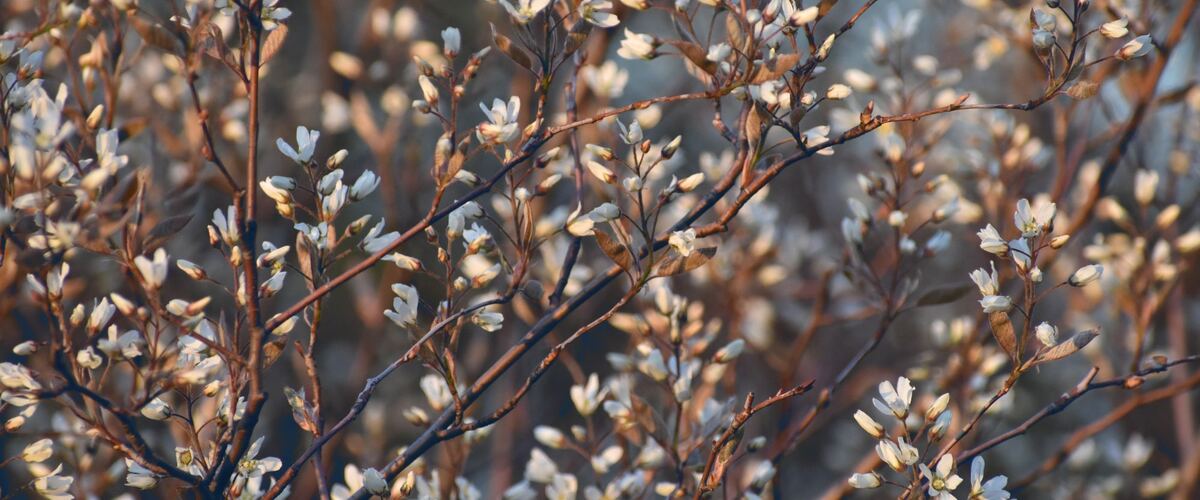
Oregon · Washington · Idaho
When to plant serviceberry
Plant in the garden: Portland and Seattle Mar 1 – Apr 26; Spokane Apr 1 – May 27; Boise Mar 20 – May 15; Bend Apr 28 – Jun 23.
Your dates in
Serviceberry, or Saskatoon, is a native small tree or large shrub in the rose family, grown for spring blossoms, edible fruit and red-orange fall color. The berries taste like a mild, almondy blueberry and are good fresh, in pies or in jam, if you beat the birds to them. Western serviceberry (Amelanchier alnifolia) is the species native here.
Puts serviceberry on your free plan, with dates for your town and a spot in your beds.
- Difficulty
- Easy
- Sun
- Full sun to part shade
- Spacing
- 6 to 10 feet apart
- Planting depth
- Same depth as in the pot or nursery
- Frost
- Hardy perennial; comes back every year
- First harvest
- First berries in two to four years
A native small tree or shrub (also called Saskatoon) with white spring flowers and blueberry-like fruit in early summer. Very cold-hardy, so it suits gardens on both sides of the Cascades.
Serviceberry planting dates
| Towns | Plant in the garden |
|---|---|
| Portland, OR, Seattle and Tacoma, WA | Mar 1 – Apr 26 |
| Spokane, WA | Apr 1 – May 27 |
| Boise and Meridian, ID | Mar 20 – May 15 |
| Bend and Redmond, OR | Apr 28 – Jun 23 |
| Astoria, OR | Mar 25 – May 20 |
Dates for six main cities. For any of the other 80 towns, type it in the box at the top of the page or browse all towns.
| Gresham, OR, Oregon City and West Linn, OR, Portland, OR, St. Helens and Scappoose, OR, Wilsonville and Canby, OR | Mar 1 – Apr 26 |
|---|---|
| Hillsboro and Beaverton, OR | Mar 5 – Apr 30 |
| Corvallis and Albany, OR, Eugene, OR, Salem, OR | Mar 1 – Apr 26 |
|---|---|
| Cottage Grove, OR | Mar 13 – May 8 |
| McMinnville and Newberg, OR | Mar 4 – Apr 29 |
| Ashland and Talent, OR | Mar 25 – May 20 |
|---|---|
| Grants Pass, OR, Medford, OR, Roseburg, OR | Mar 1 – Apr 26 |
| Astoria, OR, Brookings and Gold Beach, OR, Coos Bay and North Bend, OR, Newport and Lincoln City, OR, Tillamook, OR | Mar 25 – May 20 |
|---|
| Bend and Redmond, OR, Klamath Falls, OR | Apr 28 – Jun 23 |
|---|---|
| Burns, OR | Apr 30 – Jun 25 |
| Lakeview, OR | Apr 23 – Jun 18 |
| Madras, OR, Prineville, OR | Apr 20 – Jun 15 |
| Baker City, OR, Enterprise and Joseph, OR, John Day, OR | Apr 20 – Jun 15 |
|---|---|
| Hermiston, OR, Hood River, OR, Ontario, OR, Pendleton, OR, The Dalles, OR | Mar 20 – May 15 |
| La Grande, OR | Apr 1 – May 27 |
| Bremerton and Port Orchard, WA, Everett, WA, Kent, Renton and Auburn, WA, Seattle and Tacoma, WA | Mar 1 – Apr 26 |
|---|---|
| Olympia, WA | Mar 18 – May 13 |
| Shelton, WA | Mar 16 – May 11 |
| Anacortes, WA, Bellingham, WA, Friday Harbor and the San Juans, WA, Mount Vernon and Burlington, WA, Oak Harbor and Whidbey Island, WA | Mar 1 – Apr 26 |
|---|
| Aberdeen and Hoquiam, WA, Forks, WA, Long Beach and Ilwaco, WA | Mar 25 – May 20 |
|---|---|
| Port Angeles, WA, Port Townsend, WA | Mar 1 – Apr 26 |
| Sequim, WA | Mar 10 – May 5 |
| Centralia and Chehalis, WA | Mar 11 – May 6 |
|---|---|
| Longview and Kelso, WA, Vancouver, WA | Mar 1 – Apr 26 |
| Chelan, WA, Wenatchee, WA | Mar 20 – May 15 |
|---|---|
| Leavenworth, WA, Omak and Okanogan, WA | Apr 1 – May 27 |
| Winthrop and Twisp, WA | Apr 3 – May 29 |
| Ellensburg, WA | Apr 1 – May 27 |
|---|---|
| Ephrata and Quincy, WA, Moses Lake, WA, Sunnyside, Grandview and Prosser, WA, Tri-Cities (Pasco, Kennewick, Richland), WA, Walla Walla, WA | Mar 20 – May 15 |
| Goldendale, WA | Apr 7 – Jun 2 |
| Yakima, WA | Mar 27 – May 22 |
| Colville, WA, Pullman, WA, Spokane, WA | Apr 1 – May 27 |
|---|
| Bonners Ferry, ID, Coeur d'Alene and Post Falls, ID, Sandpoint, ID | Apr 1 – May 27 |
|---|
| Lewiston, ID | Mar 20 – May 15 |
|---|---|
| Moscow, ID | Apr 1 – May 27 |
| Boise and Meridian, ID, Emmett, ID, Nampa and Caldwell, ID | Mar 20 – May 15 |
|---|---|
| McCall, ID | May 11 – Jul 6 |
| Burley and Rupert, ID, Idaho Falls, ID, Pocatello, ID, Rexburg, ID, Twin Falls, ID | Apr 1 – May 27 |
|---|---|
| Salmon, ID | Apr 20 – Jun 15 |
Serviceberry year at a glance
| Task | J | F | M | A | M | J | J | A | S | O | N | D |
|---|---|---|---|---|---|---|---|---|---|---|---|---|
| Plant | Mar | Apr | ||||||||||
| Harvest | Jun | Jul | ||||||||||
| In bloom | Apr |
Around Portland. Colder towns, especially east of the Cascades, run a few weeks later; the table above has your town's planting dates. Harvest months are for an established plant.
How to grow serviceberry
- Pick a sunny spot with soil that drains well, and mix in an inch or two of compost.
- Plant serviceberry shrubs on your city's dates, 6 to 10 feet apart. Same depth as in the pot or nursery.
- Water through the first two summers. Prune out a few old stems in late winter to keep it productive, or train it to a single trunk as a small tree.
- Harvest: Pick in June or July when berries turn dark purple-blue and taste sweet. Net the shrub if you want to beat the birds.
Growing serviceberry in your part of the Northwest
The same plant behaves differently on the wet west side, the foggy coast and the dry, colder east side.
West-side valleys
Willamette Valley, Puget Sound, southern Oregon
Serviceberry grows well in west-side gardens. Rust can spot leaves and fruit in wet springs.
East of the Cascades
Columbia Basin, Yakima, Boise, Spokane, north Idaho
Western serviceberry grows wild across the dry east side and handles heat, cold and alkaline soil.
More serviceberry varieties
More widely sold picks that do well somewhere in the Northwest. The tag says which part of the Northwest suits each one best.
Western serviceberry
Amelanchier alnifolia, also called saskatoon, bears white spring flowers and sweet, blueberry-like fruit. Very hardy and drought-tolerant, it grows wild on both sides of the Cascades.
Both sides
Regent
A compact, productive serviceberry that stays about 4 to 6 feet tall. Sweet, juicy berries and good fall color make it ideal for small gardens and hedges.
Both sides
Smoky
A widely grown fruiting selection with large, sweet, flavorful berries. Productive and very cold-hardy, it is a good choice for jam, pies and fresh eating.
Both sides
Northline
Large, sweet berries on a suckering, multi-stem shrub. It bears young and heavily and is one of the most popular saskatoon varieties for home fruit growers.
Both sides
Autumn Brilliance
A popular landscape serviceberry grown as a small tree, with white spring flowers and brilliant orange-red fall color. The fruit is edible, though birds usually get it first.
West side
How much to grow
How many to plant
One shrub or small tree as a feature, or several, 6 to 10 feet apart, for a hedge.
What to expect
A mature shrub gives a few quarts of berries.
Storing the harvest
Keep a few days in the fridge. Freeze on a tray, or bake into pies and muffins.
Key numbers
- 2–4Years to fruit
- Self-fertilePollination
- June–JulyHarvest
- Very hardyCold hardiness
Top care tip: Water through the first two summers, then prune out a few old stems each late winter.
Growing notes
What makes the difference in Northwest gardens, in plain language.
Where it grows wild
Western serviceberry, also called Saskatoon, grows on both sides of the Cascades, from dry eastern slopes and canyons to open woods and forest edges in the west. It's a shrub or small tree with clouds of white flowers in spring, sweet purple-blue fruit in early summer, and orange to red fall color.
Because it handles cold winters and dry summers, it's one of the few fruiting natives that does well almost anywhere in the region. Regent is a compact selection, and Smoky is known for sweet fruit.
Planting, pruning and pests
Serviceberry adapts to most well-drained soils in full sun to part shade, with more fruit in sun. Water through the first two summers. In late winter, remove a few of the oldest stems and any suckers you don't want, or train one strong stem as a small tree.
Rust, leaf spot and pear slug (small, slimy larvae that skeletonize leaves) show up in some years. Most are minor, and good airflow helps.
Harvest and wildlife value
Berries ripen in June or July and taste like a cross between a blueberry and an almond-scented cherry. Pick when they're dark purple-blue and sweet. They're delicious fresh, in pies or frozen.
Birds love them, which makes serviceberry a great wildlife plant and a frustrating fruit plant. Net the shrub just before the berries color if you want a full harvest. The spring flowers feed native bees early in the season.
Good neighbors
Grows well with
- Red-flowering currant. The same sunny, well-drained spot.
- Oregon sunshine and kinnikinnick. Low, drought-tolerant natives for the ground below.
Pests and problems
What most often goes wrong with serviceberry in Northwest gardens, how to spot it and what to do.
Cedar-serviceberry rust
Signs: Orange spots and spiky growths on leaves and berries in wet springs.
What to do: Usually minor. Pick off affected fruit and keep junipers at a distance if you can.
Leaf spot
Signs: Brown spots in wet weather.
What to do: Rake up fallen leaves.
Birds
Signs: Berries vanish as they darken.
What to do: Net the shrub, or share.
Common questions about growing serviceberry
When should I plant serviceberry in Oregon, Washington and Idaho?
Plant in the garden: Mar 1 – Apr 26 in Portland and Seattle, Apr 1 – May 27 in Spokane, Mar 20 – May 15 in Boise and Apr 28 – Jun 23 in Bend. Pick your town at the top of the page for your own dates.
What does serviceberry fruit taste like?
Sweet and mild, like a blueberry with a hint of almond from the small soft seeds. They're good fresh, baked into pies or made into jam.
Is serviceberry the same as Saskatoon?
Yes. Saskatoon is another common name for western serviceberry, Amelanchier alnifolia, the species native to the Northwest.
How do I keep birds from eating my serviceberries?
Cover the shrub with bird netting before the berries start to color. Smaller, compact varieties like Regent are easier to net.
See what else to plant in March or April.
 Huckleberries
 Oregon grape
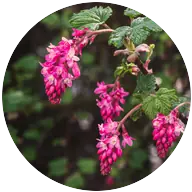 Red-flowering currant
 Camas
 Thimbleberry
 Salmonberry
 Salal
 Kinnikinnick
 Western columbine
 Douglas aster
 Oregon sunshine
 Pacific ninebark
 Sword fern
 Oregon iris