
Oregon · Washington · Idaho
When to plant tulips
Plant in fall: Portland and Seattle Oct 1 – Nov 15; Spokane Sep 25 – Oct 31; Boise Oct 1 – Nov 1; Bend Sep 20 – Oct 20.
Your dates in
Tulips are spring bulbs from the mountains of Central Asia and Turkey, grown for bold cups of color in April and May and as cut flowers. Many hybrid tulips bloom best their first year and fade after that, so gardeners often treat them as annuals; species tulips and Darwin hybrids are the most likely to come back. Unlike daffodils, tulips are a favorite of deer and squirrels.
Puts tulips on your free plan, with dates for your town and a spot in your beds.
- Difficulty
- Easy
- Sun
- Full sun
- Spacing
- 4 to 6 inches apart
- Planting depth
- 6 to 8 inches deep, pointed end up
- Frost
- Fully hardy; needs winter cold to bloom
- Flowers
- Blooms in April and May
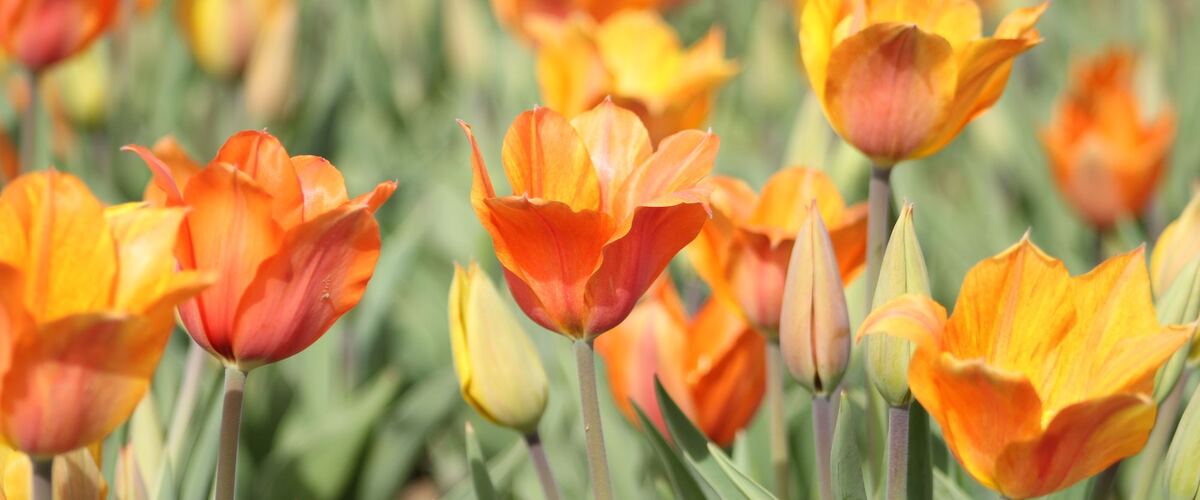
Need winter chill to bloom, so they go in during fall. Washington's Skagit Valley tulip fields show how well they grow here.
Tulip planting dates
| Towns | Plant in fall |
|---|---|
| Portland, OR, Seattle and Tacoma, WA, Astoria, OR | Oct 1 – Nov 15 |
| Spokane, WA | Sep 25 – Oct 31 |
| Boise and Meridian, ID | Oct 1 – Nov 1 |
| Bend and Redmond, OR | Sep 20 – Oct 20 |
Dates for six main cities. For any of the other 80 towns, type it in the box at the top of the page or browse all towns.
| Gresham, OR, Hillsboro and Beaverton, OR, Oregon City and West Linn, OR, Portland, OR, St. Helens and Scappoose, OR, Wilsonville and Canby, OR | Oct 1 – Nov 15 |
|---|
| Corvallis and Albany, OR, Cottage Grove, OR, Eugene, OR, McMinnville and Newberg, OR, Salem, OR | Oct 1 – Nov 15 |
|---|
| Ashland and Talent, OR, Grants Pass, OR, Medford, OR, Roseburg, OR | Oct 1 – Nov 15 |
|---|
| Astoria, OR, Brookings and Gold Beach, OR, Coos Bay and North Bend, OR, Newport and Lincoln City, OR, Tillamook, OR | Oct 1 – Nov 15 |
|---|
| Bend and Redmond, OR, Burns, OR, Klamath Falls, OR, Lakeview, OR, Madras, OR, Prineville, OR | Sep 20 – Oct 20 |
|---|
| Baker City, OR, Enterprise and Joseph, OR, John Day, OR | Sep 20 – Oct 20 |
|---|---|
| Hermiston, OR, Hood River, OR, Ontario, OR, Pendleton, OR, The Dalles, OR | Oct 1 – Nov 1 |
| La Grande, OR | Sep 25 – Oct 31 |
| Bremerton and Port Orchard, WA, Everett, WA, Kent, Renton and Auburn, WA, Olympia, WA, Seattle and Tacoma, WA, Shelton, WA | Oct 1 – Nov 15 |
|---|
| Anacortes, WA, Bellingham, WA, Friday Harbor and the San Juans, WA, Mount Vernon and Burlington, WA, Oak Harbor and Whidbey Island, WA | Oct 1 – Nov 15 |
|---|
| Aberdeen and Hoquiam, WA, Forks, WA, Long Beach and Ilwaco, WA, Port Angeles, WA, Port Townsend, WA, Sequim, WA | Oct 1 – Nov 15 |
|---|
| Centralia and Chehalis, WA, Longview and Kelso, WA, Vancouver, WA | Oct 1 – Nov 15 |
|---|
| Chelan, WA, Wenatchee, WA | Oct 1 – Nov 1 |
|---|---|
| Leavenworth, WA, Omak and Okanogan, WA, Winthrop and Twisp, WA | Sep 25 – Oct 31 |
| Colville, WA, Pullman, WA, Spokane, WA | Sep 25 – Oct 31 |
|---|
| Bonners Ferry, ID, Coeur d'Alene and Post Falls, ID, Sandpoint, ID | Sep 25 – Oct 31 |
|---|
| Lewiston, ID | Oct 1 – Nov 1 |
|---|---|
| Moscow, ID | Sep 25 – Oct 31 |
| Boise and Meridian, ID, Emmett, ID, Nampa and Caldwell, ID | Oct 1 – Nov 1 |
|---|---|
| McCall, ID | Sep 20 – Oct 20 |
| Burley and Rupert, ID, Idaho Falls, ID, Pocatello, ID, Rexburg, ID, Twin Falls, ID | Sep 25 – Oct 31 |
|---|---|
| Salmon, ID | Sep 20 – Oct 20 |
Tulip year at a glance
| Task | J | F | M | A | M | J | J | A | S | O | N | D |
|---|---|---|---|---|---|---|---|---|---|---|---|---|
| Plant | Oct | Nov | ||||||||||
| Cut flowers | Mar | Apr | May |
Around Portland. Colder towns, especially east of the Cascades, run a few weeks later; the table above has your town's planting dates.
How to grow tulips
- Buy firm, heavy bulbs from a garden center or bulb grower.
- Pick a sunny spot with soil that drains well; bulbs rot in soggy ground.
- Plant them on your city's dates, 6 to 8 inches deep, pointed end up, 4 to 6 inches apart.
- Water once after planting, then let the rain take over. Leave the leaves until they yellow after blooming.
- Harvest: Cut when buds show color but are still closed. After blooming, let the leaves die back on their own to feed the bulb.
Growing tulips in your part of the Northwest
The same plant behaves differently on the wet west side, the foggy coast and the dry, colder east side.
West-side valleys
Willamette Valley, Puget Sound, southern Oregon
Wet summer soil makes many tulips fade after the first year. Plant in well-drained beds or treat them as annuals. Skagit Valley's tulip fields show how well they bloom here in spring.
Coast
Oregon and Washington coast
Tulips bloom well, but wet soil can rot bulbs; plant in raised beds or pots.
East of the Cascades
Columbia Basin, Yakima, Boise, Spokane, north Idaho
Dry, hot summers are what tulips need to rebloom year after year. Plant them deep, about 8 inches.
High desert and mountain towns
Central Oregon, high eastern Oregon valleys, McCall, Salmon
Tulips are hardy here and bloom later in spring. Deer and rodents eat them, so protect bulbs.
More tulip varieties
More widely sold picks that do well somewhere in the Northwest. The tag says which part of the Northwest suits each one best.
Darwin hybrids
Big, sturdy flowers on tall stems, and the group most likely to come back for several years. Plant them deep in a well-drained, sunny bed for the best repeat show.
Both sides
Apeldoorn
A classic bright red Darwin hybrid with large, long-lasting flowers on strong stems. It reliably returns for several springs and stands up well to Northwest wind and rain.
Both sides
Queen of Night
Deep maroon flowers so dark they read as black, opening late in the season. It pairs beautifully with white or pink tulips and makes an elegant, long-lasting cut flower.
Both sides
Pink Impression
Huge rosy pink blooms on tall stems from one of the most reliable Darwin hybrids. It tends to return for years, making it a good choice for gardeners who want tulips to stay.
Both sides
Angelique
Soft pink, peony-like double flowers with a light fragrance. The heavy blooms can bow in hard rain, so give it a slightly sheltered spot or cut a few for the vase.
Both sides
Princess Irene
Orange petals brushed with purple flames on short, sturdy stems. It holds up well in wind and rain and is a popular, slightly fragrant choice for pots and front borders.
Both sides
How much to grow
How many to plant
Plant in groups of 10 or more for a good show. For cutting, plant 25 to 50 bulbs.
In the vase
Cut tulips last about a week; they keep growing in the vase.
Key numbers
- 12–16 weeks below 48°FWinter cold needed
- October–NovemberPlant
- 6–8 inches (3× bulb)Depth
- About 6 weeksKeep leaves
- Darwin hybrids, speciesReturn best
- Not needed herePre-chill?
Top care tip: Let the leaves die back on their own for about six weeks after bloom so the bulb can recharge.
The plant science
The plant biology behind the advice above, in plain language.
Why tulips need winter
Tulip bulbs need a long cold period, roughly 12 to 16 weeks below about 48°F, before the flower stem will grow properly. Northwest winters provide that naturally, so there's no need to chill bulbs in the fridge. Plant in fall once the soil has cooled, usually October to November, so roots grow before winter.
Depth and drainage
Plant bulbs about three times as deep as they are tall, typically 6 to 8 inches. Deeper planting helps keep bulbs from splitting into small, non-flowering bulbs and makes it harder for squirrels to dig them up. Bulbs rot in soggy soil, so choose a well-drained spot or a raised bed.
Why tulips often don't come back
After blooming, a tulip bulb is used up and is replaced by new daughter bulbs. These are often too small to flower the next year, so blooms dwindle. Many modern hybrids are bred for one strong show. Darwin hybrids and species tulips return much more reliably, especially in a sunny spot with a dry summer and no summer watering, which mimics their native habitat in Central Asia.
Leaves feed next year's bulb
After flowering, leave the leaves until they turn yellow, usually about six weeks. They're making the food that rebuilds the bulb. Snap off spent flower heads so the plant doesn't put energy into seeds. Bulbs come with their own food supply, so they need no fertilizer at planting; for bulbs you want to keep, a light feeding in fall helps.
Tulip fire and pests
Tulip fire is a fungal disease that causes twisted, spotted, scorched-looking leaves and gray mold in cool, wet springs. Dig out and throw away affected plants and bulbs, and don't plant tulips in that spot for at least three years. Squirrels, voles and deer love tulips, so wire cages or planting among daffodils, which animals avoid, can help. Tulips, especially the bulbs, are toxic to cats and dogs.
As cut flowers
Cut tulips when buds show color but are still closed. They keep growing in the vase, often several inches, and bend toward the light, so trim stems and turn the vase as needed.
Good neighbors
Good neighbors
- Pansies and forget-me-nots. Cover the soil around tulips in spring.
Pests and problems
What most often goes wrong with tulips in Northwest gardens, how to spot it and what to do.
Squirrels, voles and deer
Signs: Bulbs dug up or flowers eaten.
What to do: Plant in wire cages, or grow daffodils instead.
Tulip fire
Signs: Brown spots and twisted, stunted shoots in wet springs.
What to do: Remove infected plants and don't replant tulips in the same spot for three years.
Fewer flowers each year
Signs: Many varieties fade after a year or two.
What to do: Treat fancy tulips as annuals, or grow species and Darwin types.
Common questions about growing tulips
When should I plant tulips in Oregon, Washington and Idaho?
Plant in fall: Oct 1 – Nov 15 in Portland and Seattle, Sep 25 – Oct 31 in Spokane, Oct 1 – Nov 1 in Boise and Sep 20 – Oct 20 in Bend. Pick your town at the top of the page for your own dates.
Will my tulips come back next year?
Many modern hybrids bloom well only once, because the bulbs split into smaller ones that don't flower. Darwin hybrids and species tulips return much better, especially in sunny, well-drained spots that stay dry in summer.
When can I cut back tulip leaves?
Once they turn yellow, usually about six weeks after flowering. The leaves are making the food the bulb needs for next year.
Do I need to chill tulip bulbs before planting?
Not in the Northwest. Winters here provide the 12 to 16 weeks of cold tulips need. Pre-chilling is only needed in mild-winter climates like Southern California.
See what else to plant in October or November.
 Dahlias
 Sunflowers
 Zinnias
 Sweet peas
 Daffodils
 Peonies
 Cosmos
 Nasturtiums
 Marigolds
 Calendula
 Snapdragons
 Ranunculus