
Oregon · Washington · Idaho
When to plant horseradish
Plant in the garden: Portland and Seattle Mar 1 – Apr 12; Spokane Apr 1 – May 13; Boise Mar 20 – May 1; Bend Apr 28 – Jun 9.
Your dates in
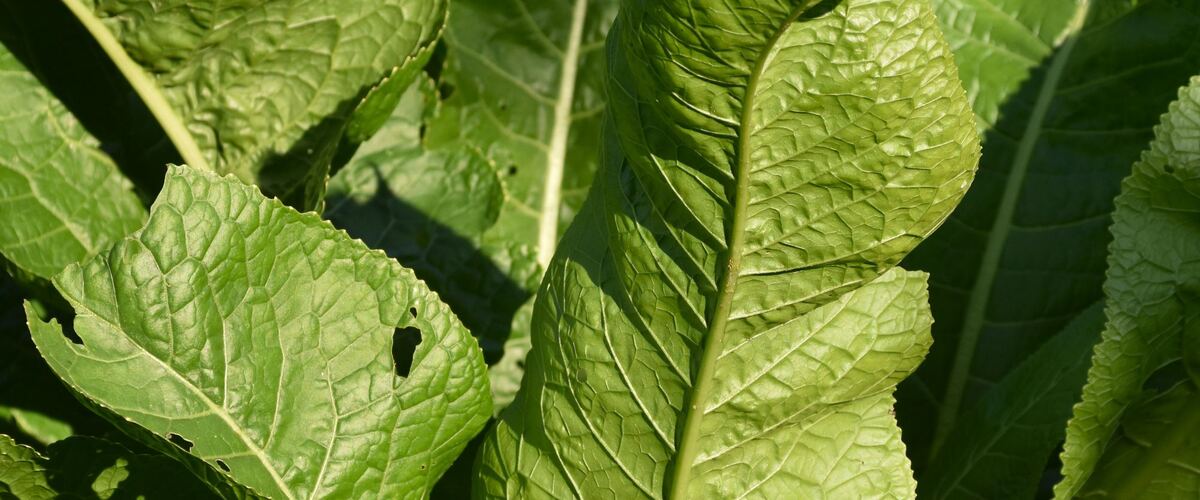
Horseradish is a hardy cabbage-family perennial grown for its thick white root, grated fresh into a fiery condiment. The heat comes from compounds released when the root is cut, and they fade fast, so vinegar is mixed in soon after grating to hold it. Fresh-dug roots are far hotter than jarred horseradish.
Puts horseradish on your free plan, with dates for your town and a spot in your beds.
- Difficulty
- Easy
- Sun
- Full sun to light shade
- Spacing
- 18 to 24 inches apart
- Planting depth
- Lay root cuttings at a slant, top end 2 to 3 inches below the soil
- Frost
- Very hardy; roots survive any Northwest winter
- First harvest
- Dig roots from the first fall on
Plant a root cutting in early spring and dig the roots in fall or winter. Any piece of root left behind sprouts again, so give it a corner or a big tub where it can't take over.
Horseradish planting dates
| Towns | Plant in the garden |
|---|---|
| Portland, OR, Seattle and Tacoma, WA | Mar 1 – Apr 12 |
| Spokane, WA | Apr 1 – May 13 |
| Boise and Meridian, ID | Mar 20 – May 1 |
| Bend and Redmond, OR | Apr 28 – Jun 9 |
| Astoria, OR | Mar 25 – May 6 |
Dates for six main cities. For any of the other 80 towns, type it in the box at the top of the page or browse all towns.
| Gresham, OR, Oregon City and West Linn, OR, Portland, OR, St. Helens and Scappoose, OR, Wilsonville and Canby, OR | Mar 1 – Apr 12 |
|---|---|
| Hillsboro and Beaverton, OR | Mar 5 – Apr 16 |
| Corvallis and Albany, OR, Eugene, OR, Salem, OR | Mar 1 – Apr 12 |
|---|---|
| Cottage Grove, OR | Mar 13 – Apr 24 |
| McMinnville and Newberg, OR | Mar 4 – Apr 15 |
| Ashland and Talent, OR | Mar 25 – May 6 |
|---|---|
| Grants Pass, OR, Medford, OR, Roseburg, OR | Mar 1 – Apr 12 |
| Astoria, OR, Brookings and Gold Beach, OR, Coos Bay and North Bend, OR, Newport and Lincoln City, OR, Tillamook, OR | Mar 25 – May 6 |
|---|
| Bend and Redmond, OR, Klamath Falls, OR | Apr 28 – Jun 9 |
|---|---|
| Burns, OR | Apr 30 – Jun 11 |
| Lakeview, OR | Apr 23 – Jun 4 |
| Madras, OR, Prineville, OR | Apr 20 – Jun 1 |
| Baker City, OR, Enterprise and Joseph, OR, John Day, OR | Apr 20 – Jun 1 |
|---|---|
| Hermiston, OR, Hood River, OR, Ontario, OR, Pendleton, OR, The Dalles, OR | Mar 20 – May 1 |
| La Grande, OR | Apr 1 – May 13 |
| Bremerton and Port Orchard, WA, Everett, WA, Kent, Renton and Auburn, WA, Seattle and Tacoma, WA | Mar 1 – Apr 12 |
|---|---|
| Olympia, WA | Mar 18 – Apr 29 |
| Shelton, WA | Mar 16 – Apr 27 |
| Anacortes, WA, Bellingham, WA, Friday Harbor and the San Juans, WA, Mount Vernon and Burlington, WA, Oak Harbor and Whidbey Island, WA | Mar 1 – Apr 12 |
|---|
| Aberdeen and Hoquiam, WA, Forks, WA, Long Beach and Ilwaco, WA | Mar 25 – May 6 |
|---|---|
| Port Angeles, WA, Port Townsend, WA | Mar 1 – Apr 12 |
| Sequim, WA | Mar 10 – Apr 21 |
| Centralia and Chehalis, WA | Mar 11 – Apr 22 |
|---|---|
| Longview and Kelso, WA, Vancouver, WA | Mar 1 – Apr 12 |
| Chelan, WA, Wenatchee, WA | Mar 20 – May 1 |
|---|---|
| Leavenworth, WA, Omak and Okanogan, WA | Apr 1 – May 13 |
| Winthrop and Twisp, WA | Apr 3 – May 15 |
| Ellensburg, WA | Apr 1 – May 13 |
|---|---|
| Ephrata and Quincy, WA, Moses Lake, WA, Sunnyside, Grandview and Prosser, WA, Tri-Cities (Pasco, Kennewick, Richland), WA, Walla Walla, WA | Mar 20 – May 1 |
| Goldendale, WA | Apr 7 – May 19 |
| Yakima, WA | Mar 27 – May 8 |
| Colville, WA, Pullman, WA, Spokane, WA | Apr 1 – May 13 |
|---|
| Bonners Ferry, ID, Coeur d'Alene and Post Falls, ID, Sandpoint, ID | Apr 1 – May 13 |
|---|
| Lewiston, ID | Mar 20 – May 1 |
|---|---|
| Moscow, ID | Apr 1 – May 13 |
| Boise and Meridian, ID, Emmett, ID, Nampa and Caldwell, ID | Mar 20 – May 1 |
|---|---|
| McCall, ID | May 11 – Jun 22 |
| Burley and Rupert, ID, Idaho Falls, ID, Pocatello, ID, Rexburg, ID, Twin Falls, ID | Apr 1 – May 13 |
|---|---|
| Salmon, ID | Apr 20 – Jun 1 |
Horseradish year at a glance
| Task | J | F | M | A | M | J | J | A | S | O | N | D |
|---|---|---|---|---|---|---|---|---|---|---|---|---|
| Plant | Mar | Apr | ||||||||||
| Harvest | Jan | Feb | Mar | Oct | Nov | Dec |
Around Portland. Colder towns, especially east of the Cascades, run a few weeks later; the table above has your town's planting dates. Harvest months are for an established plant.
How to grow horseradish
- Pick a sunny spot with soil that drains well, and mix in an inch or two of compost.
- Plant horseradish root cuttings on your city's dates, 18 to 24 inches apart. Lay root cuttings at a slant, top end 2 to 3 inches below the soil.
- Water in dry spells so the roots stay tender. Remove side roots in summer if you want one thick, straight main root.
- Harvest: Dig roots in fall after a frost, when the flavor is strongest, or any time through winter. Grate them fresh; the heat fades within minutes of grating.
Growing horseradish in your part of the Northwest
The same plant behaves differently on the wet west side, the foggy coast and the dry, colder east side.
West-side valleys
Willamette Valley, Puget Sound, southern Oregon
Horseradish is easy and spreads. Grow it in its own corner or a large container.
East of the Cascades
Columbia Basin, Yakima, Boise, Spokane, north Idaho
Horseradish handles cold winters and is easy to grow. Water in dry spells for the best roots.
More horseradish varieties
More widely sold picks that do well somewhere in the Northwest. The tag says which part of the Northwest suits each one best.
Maliner Kren
The classic grower's horseradish, with smooth, thick white roots and strong heat.
Both sides
Big Top Western
Large roots and broad leaves. Widely sold as root cuttings and very hardy.
Both sides
Common horseradish
Most root sets sold at garden centers are unnamed but grow just as well. Look for firm, pencil-thick pieces.
Both sides
How much to grow
How many to plant
One or two plants are plenty for most households.
What to expect
About 1 to 2 pounds of root per plant each year.
Storing the harvest
Roots keep for months in a bag in the fridge. Grate small amounts as you need them.
Key numbers
- Root cuttingsPlant
- Fall to early springHarvest
- 18–24 inSpacing
- SpreadingBiggest risk
Top care tip: Dig every piece of root at harvest, because any bit left behind becomes a new plant.
Growing notes
What makes the difference in Northwest gardens, in plain language.
Planting a root cutting
Horseradish is grown from pieces of root, often sold as sets, about pencil-thick and 8 to 12 inches long. The top end is usually cut flat and the bottom at a slant. Plant them in early spring, laid at a 45-degree angle with the top end 2 to 3 inches below the surface.
It likes deep, loose soil in full sun. Rocky or heavy clay soil gives you forked, twisted roots. A large tub or a raised bed is often the best place, because it keeps the plant contained.
Keeping it in bounds
Every bit of root can grow into a new plant, so horseradish is hard to get rid of once it's in. Dig the whole root system at harvest, and replant only the pieces you want for next year.
Many growers treat it as an annual: plant cuttings in spring, dig everything in late fall, keep the big roots for the kitchen and save a few side roots to replant.
Harvest and heat
The roots grow most in late summer and fall. Dig after the first frosts, when flavor is sharpest, or leave them in the ground and dig as needed through winter on the west side.
The heat comes from compounds released when the root is grated or cut, and it fades within minutes. Grate it in a well-ventilated spot and mix with vinegar right away to hold the heat.
Good neighbors
Good neighbors
- A tub or corner of its own. It spreads by roots and is hard to get rid of.
Keep apart
- Vegetable beds. Every root piece left behind sprouts.
Pests and problems
What most often goes wrong with horseradish in Northwest gardens, how to spot it and what to do.
Spreading
Signs: New plants pop up wherever you dug.
What to do: Grow in a large tub and dig carefully.
Flea beetles
Signs: Tiny holes in the leaves.
What to do: Mostly cosmetic; roots are unaffected.
Common questions about growing horseradish
When should I plant horseradish in Oregon, Washington and Idaho?
Plant in the garden: Mar 1 – Apr 12 in Portland and Seattle, Apr 1 – May 13 in Spokane, Mar 20 – May 1 in Boise and Apr 28 – Jun 9 in Bend. Pick your town at the top of the page for your own dates.
When do you plant horseradish?
In early spring, as soon as the soil can be worked. In mild west-side gardens you can also plant in fall.
How do I stop horseradish from spreading?
Grow it in a big tub or a bottomless barrel sunk into the ground, and dig every piece of root at harvest.
Can I eat the leaves?
Young leaves are edible and peppery, used in small amounts like a green. The root is the main harvest.
See what else to plant in March or April.
 Asparagus
 Rhubarb
 Artichokes
 Sorrel