
Oregon · Washington · Idaho
When to plant rhubarb
Plant in the garden: Portland and Seattle Mar 1 – Apr 12; Spokane Apr 1 – May 13; Boise Mar 20 – May 1; Bend Apr 28 – Jun 9.
Your dates in
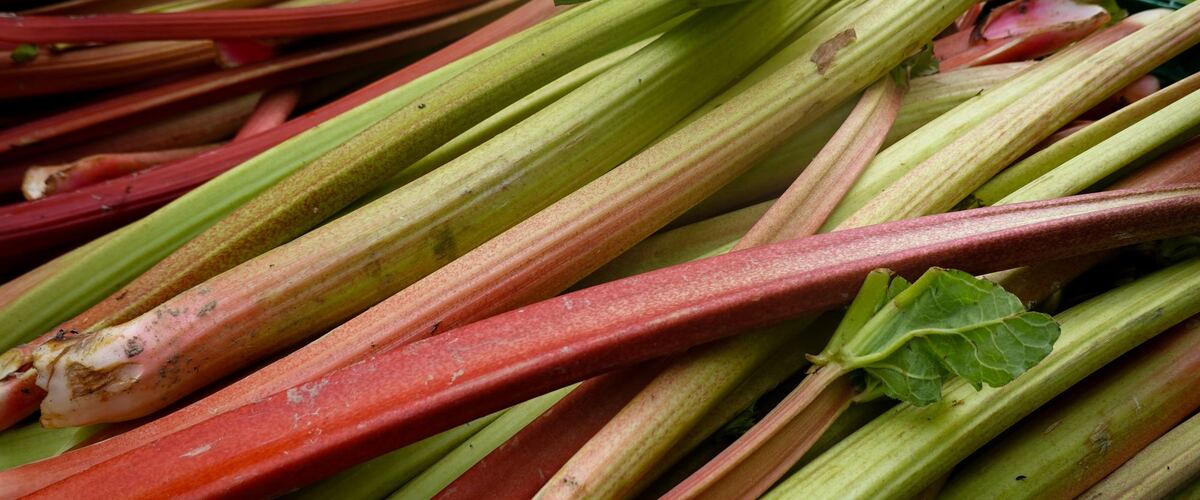
Rhubarb is a hardy perennial grown for its thick, tart leaf stalks, which are cooked with sugar into pie, crisp, sauce and jam, often with strawberries. Stalks can be red, pink or green, and the color makes little difference to flavor. Botanically it's a vegetable, but a 1947 US court ruled it a fruit for import duties.
Puts rhubarb on your free plan, with dates for your town and a spot in your beds.
- Difficulty
- Easy
- Sun
- Full sun to part shade
- Spacing
- 3 to 4 feet apart
- Planting depth
- Crown buds 1 to 2 inches below the surface
- Frost
- Hardy perennial; comes back every year
- First harvest
- Light picking in year two; full harvests from year three
Plant it where it can stay for a decade. Don't pick the first year, and never eat the leaves, which are poisonous.
Rhubarb planting dates
| Towns | Plant in the garden |
|---|---|
| Portland, OR, Seattle and Tacoma, WA | Mar 1 – Apr 12 |
| Spokane, WA | Apr 1 – May 13 |
| Boise and Meridian, ID | Mar 20 – May 1 |
| Bend and Redmond, OR | Apr 28 – Jun 9 |
| Astoria, OR | Mar 25 – May 6 |
Dates for six main cities. For any of the other 80 towns, type it in the box at the top of the page or browse all towns.
| Gresham, OR, Oregon City and West Linn, OR, Portland, OR, St. Helens and Scappoose, OR, Wilsonville and Canby, OR | Mar 1 – Apr 12 |
|---|---|
| Hillsboro and Beaverton, OR | Mar 5 – Apr 16 |
| Corvallis and Albany, OR, Eugene, OR, Salem, OR | Mar 1 – Apr 12 |
|---|---|
| Cottage Grove, OR | Mar 13 – Apr 24 |
| McMinnville and Newberg, OR | Mar 4 – Apr 15 |
| Ashland and Talent, OR | Mar 25 – May 6 |
|---|---|
| Grants Pass, OR, Medford, OR, Roseburg, OR | Mar 1 – Apr 12 |
| Astoria, OR, Brookings and Gold Beach, OR, Coos Bay and North Bend, OR, Newport and Lincoln City, OR, Tillamook, OR | Mar 25 – May 6 |
|---|
| Bend and Redmond, OR, Klamath Falls, OR | Apr 28 – Jun 9 |
|---|---|
| Burns, OR | Apr 30 – Jun 11 |
| Lakeview, OR | Apr 23 – Jun 4 |
| Madras, OR, Prineville, OR | Apr 20 – Jun 1 |
| Baker City, OR, Enterprise and Joseph, OR, John Day, OR | Apr 20 – Jun 1 |
|---|---|
| Hermiston, OR, Hood River, OR, Ontario, OR, Pendleton, OR, The Dalles, OR | Mar 20 – May 1 |
| La Grande, OR | Apr 1 – May 13 |
| Bremerton and Port Orchard, WA, Everett, WA, Kent, Renton and Auburn, WA, Seattle and Tacoma, WA | Mar 1 – Apr 12 |
|---|---|
| Olympia, WA | Mar 18 – Apr 29 |
| Shelton, WA | Mar 16 – Apr 27 |
| Anacortes, WA, Bellingham, WA, Friday Harbor and the San Juans, WA, Mount Vernon and Burlington, WA, Oak Harbor and Whidbey Island, WA | Mar 1 – Apr 12 |
|---|
| Aberdeen and Hoquiam, WA, Forks, WA, Long Beach and Ilwaco, WA | Mar 25 – May 6 |
|---|---|
| Port Angeles, WA, Port Townsend, WA | Mar 1 – Apr 12 |
| Sequim, WA | Mar 10 – Apr 21 |
| Centralia and Chehalis, WA | Mar 11 – Apr 22 |
|---|---|
| Longview and Kelso, WA, Vancouver, WA | Mar 1 – Apr 12 |
| Chelan, WA, Wenatchee, WA | Mar 20 – May 1 |
|---|---|
| Leavenworth, WA, Omak and Okanogan, WA | Apr 1 – May 13 |
| Winthrop and Twisp, WA | Apr 3 – May 15 |
| Ellensburg, WA | Apr 1 – May 13 |
|---|---|
| Ephrata and Quincy, WA, Moses Lake, WA, Sunnyside, Grandview and Prosser, WA, Tri-Cities (Pasco, Kennewick, Richland), WA, Walla Walla, WA | Mar 20 – May 1 |
| Goldendale, WA | Apr 7 – May 19 |
| Yakima, WA | Mar 27 – May 8 |
| Colville, WA, Pullman, WA, Spokane, WA | Apr 1 – May 13 |
|---|
| Bonners Ferry, ID, Coeur d'Alene and Post Falls, ID, Sandpoint, ID | Apr 1 – May 13 |
|---|
| Lewiston, ID | Mar 20 – May 1 |
|---|---|
| Moscow, ID | Apr 1 – May 13 |
| Boise and Meridian, ID, Emmett, ID, Nampa and Caldwell, ID | Mar 20 – May 1 |
|---|---|
| McCall, ID | May 11 – Jun 22 |
| Burley and Rupert, ID, Idaho Falls, ID, Pocatello, ID, Rexburg, ID, Twin Falls, ID | Apr 1 – May 13 |
|---|---|
| Salmon, ID | Apr 20 – Jun 1 |
Rhubarb year at a glance
| Task | J | F | M | A | M | J | J | A | S | O | N | D |
|---|---|---|---|---|---|---|---|---|---|---|---|---|
| Plant | Mar | Apr | ||||||||||
| Harvest | Apr | May | Jun |
Around Portland. Colder towns, especially east of the Cascades, run a few weeks later; the table above has your town's planting dates. Harvest months are for an established plant.
How to grow rhubarb
- Pick a sunny spot with soil that drains well, and mix in an inch or two of compost.
- Plant rhubarb crowns on your city's dates, 3 to 4 feet apart. Crown buds 1 to 2 inches below the surface.
- Mulch with compost each spring, and cut off flower stalks as soon as they appear.
- Harvest: Pull (don't cut) stalks when they're 10 to 15 inches long. Take no more than a third at once, and stop in early summer. Never eat the leaves.
Growing rhubarb in your part of the Northwest
The same plant behaves differently on the wet west side, the foggy coast and the dry, colder east side.
West-side valleys
Willamette Valley, Puget Sound, southern Oregon
Rhubarb needs winter chill, which the west side provides. Crown rot can occur in waterlogged soil.
East of the Cascades
Columbia Basin, Yakima, Boise, Spokane, north Idaho
Rhubarb thrives with cold winters. Summer heat can make it stall; water deeply.
High desert and mountain towns
Central Oregon, high eastern Oregon valleys, McCall, Salmon
Rhubarb is very hardy and grows well in cold winters.
More rhubarb varieties
More widely sold picks that do well somewhere in the Northwest. The tag says which part of the Northwest suits each one best.
Victoria
The vigorous classic with thick green stalks blushed red at the base. Heavy yields and tart, full flavor make it a favorite for pies and sauces.
Both sides
Canada Red
Red stalks inside and out with a sweeter, less tart flavor than green types. Very cold hardy and slow to send up flower stalks.
Both sides
Crimson Red
Bright red, tender stalks with rich, tangy flavor. Hardy and productive, it makes rosy-colored sauces and jams. Pull stalks in spring and stop by early summer.
Both sides
Valentine
Deep red stalks that keep their color when cooked, with a sweet-tart flavor. It sends up fewer flower stalks than many varieties.
Both sides
MacDonald
A vigorous variety with tall, bright red stalks and good resistance to root rot, a plus in wet soils. It is cold hardy and long-lived.
West side
Glaskin's Perpetual
One of the few rhubarbs commonly grown from seed. It is known for staying pickable later into summer than most varieties.
Both sides
How much to grow
How many to plant
For a family of four, 2 to 4 plants.
What to expect
About 2 to 4 pounds of stalks per plant each spring once established.
Storing the harvest
Stalks keep two weeks in the fridge. Chop and freeze extras raw.
Key numbers
- 6.0–6.8Soil pH
- 10–15 inches longPull stalks at
- Every 5–10 yearsDivide
- Crown rot in wet soilBiggest risk
Top care tip: Pull stalks with a twist instead of cutting, and stop harvesting by midsummer so the plant can recover.
Growing notes
What makes the difference in Northwest gardens, in plain language.
Soil and feeding
Rhubarb is a hungry perennial that grows huge leaves every spring, so it rewards rich soil. Dig plenty of compost or aged manure into a wide area before planting, and spread a couple of inches of compost around the plant each spring, keeping it off the crown itself. Good drainage is essential: crowns rot in soggy winter soil, which is why west-side gardeners often plant on a low mound.
Rhubarb needs a cold winter to rest, which every part of the Northwest provides.
Harvest without weakening the plant
Pull stalks with a twist instead of cutting them, which leaves no stub to rot. Take no more than a third of the stalks at a time and stop in early summer, so the leaves that remain can rebuild the crown for next year. Thin, spindly stalks are a sign to stop sooner.
The leaves contain high levels of oxalic acid and are poisonous to eat, so cut them off and use only the stalks. Leaves are fine to put in the compost pile.
Care over the years
Cut flower stalks off at the base as soon as they appear; seed-making takes energy away from new leaves. Older plants flower more, and so do stressed ones.
After five to ten years, clumps get crowded and stalks get thinner. In early spring, just as buds swell, dig the crown and split it with a sharp spade into pieces that each have at least one or two buds and a good chunk of root. Replant them in fresh, enriched soil.
Good neighbors
Good neighbors
- Strawberries. Both crop in late spring and like rich, well-drained soil.
Pests and problems
What most often goes wrong with rhubarb in Northwest gardens, how to spot it and what to do.
Crown rot
Signs: Stalks collapse and the crown turns mushy.
What to do: Plant on a slight mound in soil that drains well.
Flower stalks
Signs: Thick stalks with large flower heads in spring.
What to do: Cut them off at the base so the plant keeps making leaves.
Slugs
Signs: Holes in the leaves.
What to do: Mostly cosmetic; bait if young plants are hit hard.
Common questions about growing rhubarb
When should I plant rhubarb in Oregon, Washington and Idaho?
Plant in the garden: Mar 1 – Apr 12 in Portland and Seattle, Apr 1 – May 13 in Spokane, Mar 20 – May 1 in Boise and Apr 28 – Jun 9 in Bend. Pick your town at the top of the page for your own dates.
Why is my rhubarb flowering?
Mature plants flower naturally, and stress from heat, drought or poor soil makes it more likely. Cut the flower stalk off at the base right away. If a plant flowers heavily every year, it may be time to divide it.
Why are my rhubarb stalks green instead of red?
Color depends on the variety, not ripeness. Victoria is mostly green with red at the base, while Canada Red and Crimson Red are redder. Green stalks taste just as good, though they make paler pies and jam.
Can I put rhubarb leaves in my compost?
Yes. The oxalic acid that makes the leaves poisonous to eat breaks down during composting and doesn't harm the pile or your soil. Just don't feed them to people or animals.
See what else to plant in March or April.
 Asparagus
 Artichokes
 Horseradish
 Sorrel